
AI news ·
Mass General Brigham monitors but does not adopt ChatGPT medical records integration
OpenAI integrated Epic medical records into ChatGPT, letting authorized doctors query patient histories in plain language. Mass General Brigham is monitoring the feature but has no immediate adoption plans.
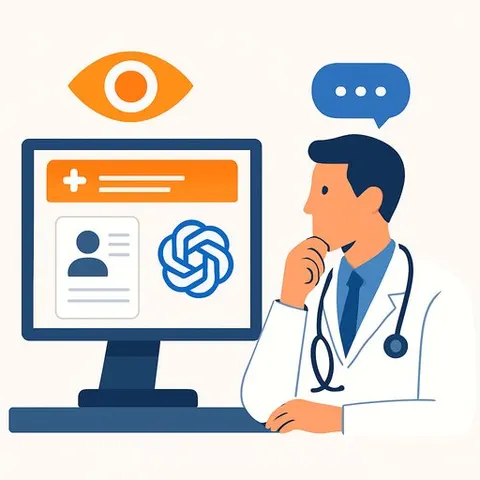
OpenAI has integrated medical records into ChatGPT, pulling data from Epic, the company behind MyChart and other widely used electronic health record platforms. The move gives authorized physicians a way to search patient histories, match individuals to clinical trials, and surface recent concerns through a conversational interface - a shift that brings generative AI directly into clinical workflows at a time when health systems face mounting pressure to reduce administrative burden.
Mass General Brigham confirmed it is monitoring the new feature but has no immediate plans to adopt it. Boston Children's Hospital and Beth Israel Deaconess Medical Center did not respond to inquiries about whether they are rolling out the integration.
What the integration actually does
Doctors who already have access to Epic's patient records can use ChatGPT to query that information in plain language. Instead of clicking through menus and structured fields, a clinician could ask something like "Has this patient's blood pressure trended upward in the last six months?" and receive a summary drawn from the record. OpenAI said the tool can also flag relevant clinical trials and identify a patient's most recent symptoms or complaints without manual chart review.
The data stays within the existing Epic infrastructure. OpenAI is not training its models on patient records, and only authorized clinicians at institutions that opt in can use the feature. The integration builds on Epic's existing relationship with Microsoft, which invested heavily in OpenAI and already provides cloud hosting for many Epic customers.
Early reactions from Boston hospitals
Boston's major academic medical centers are moving cautiously. Mass General Brigham, the largest health system in Massachusetts, said it is evaluating the technology but has not committed to a timeline. The hesitation reflects broader concerns about accuracy, liability, and whether AI-generated summaries might miss critical details buried in unstructured notes.
Dr. Sahar Hashmi, an AI expert and Harvard instructor, spoke to WBUR's Morning Edition about the tension between the technology's promise and patient concerns. She emphasized that tools like this can reduce the hours clinicians spend on documentation - a leading cause of burnout - but cautioned that oversight remains essential when AI is summarizing clinical data that informs treatment decisions.
Why this matters for healthcare professionals
Clinicians and health system leaders should watch how early adopters handle two practical challenges. First, verification workflow: will AI-generated summaries require a second human review before entering a treatment decision, and who bears liability if something is missed? Second, patient trust: health systems that deploy AI search tools will need clear communication strategies, since patients may not know their records are being queried through a large language model, even if the data never leaves the institution's control.
For professionals looking to understand how these tools work under the hood, ChatGPT Courses cover the fundamentals of prompt design and the limitations of large language models - skills that are becoming relevant for clinical informatics teams evaluating vendor AI features. Similarly, AI for Healthcare Courses address the compliance and implementation questions that arise when generative AI enters a regulated clinical environment.