
AI news ·
MedPal AI launches Juno health companion to triage patients and dispense medication
MedPal AI launched Juno, a health companion that manages patient care and dispenses medication. It serves the 40 million people seeking daily AI health advice.
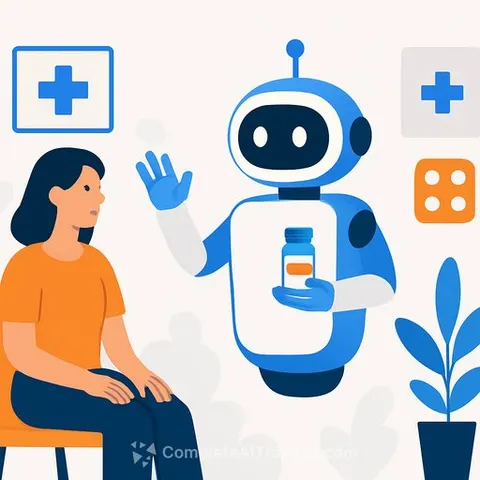
MedPal AI has launched Juno, an agentic AI health companion that actively manages patient care rather than simply answering questions, marking a shift from reactive information tools to proactive healthcare action. The platform is powered by Anthropic's Claude models and integrated into the company's newly upgraded Health OS portal, where it continuously monitors patient health data and engages users through WhatsApp and web channels.
From questions to proactive care
Traditional AI health assistants have operated as information providers, clarifying symptoms or treatment options when prompted. Juno breaks from that pattern. It scans for opportunities to intervene, offering guidance when patients need support rather than waiting for them to ask. The design follows a broader consumer technology trend toward agentic AI - industry observers have called this shift the "OpenClaw moment," where assistants begin executing tasks for users instead of only responding to prompts.
Demand for AI-based health guidance is already enormous. OpenAI reports that more than 40 million people seek health-related information through ChatGPT every day. Most of these tools stop at providing answers. Juno was built to carry the process further.
A rebuilt technical foundation
The launch coincides with a complete infrastructure overhaul. MedPal AI migrated away from Google Vertex AI to a multi-layer architecture running on DigitalOcean, with separate systems handling clinical reasoning and conversational tasks. Anthropic's latest Claude models drive Juno's ability to understand context and make autonomous decisions, while dedicated clinical response systems ensure medically appropriate outputs.
Closing the care loop
What sets Juno apart is its capacity to connect information, clinical consultation, and treatment fulfilment. Trained by MedPal AI's clinical services team, the platform provides health advice and triage. When clinically appropriate, it connects patients directly to one of the company's qualified GPs for consultation and prescribing. Prescribed medication is then dispensed through robotic pharmacy infrastructure and delivered to the patient's door. Juno continues to follow up afterward, monitoring recovery and outcomes.
Founder and Chief Executive Jason Drummond said: "The world has just watched agentic AI go mainstream, and tens of millions of people are already asking AI about their health every single day. The difference with Juno is that it does not stop at an answer. It can advise, triage, connect you to one of our GPs, have your medication dispensed by robot and shipped to your door, and then check that you are getting better. That is the whole point of Health OS. We do not just tell you what is wrong, we help to treat it."
Why this matters for healthcare professionals
Agentic AI in healthcare narrows the distance between a patient's first question and a treatment outcome. For clinicians, practice managers, and digital health teams, this signals a future where AI does more than support triage - it coordinates care pathways, reduces administrative delays, and keeps patients engaged throughout recovery. As models like Juno begin to manage complete healthcare workflows, practical knowledge of AI for Healthcare becomes part of staying effective in a digitally connected clinical environment.