
AI news ·
Memory-powered agentic SOCs unify security operations with AI agents
Agentic SOCs add memory architectures so AI agents retain context and learn from past incidents, enabling faster response to alerts. A key enabler is Mini-SGLang, which cuts inference latency via speculative decoding, streaming, and caching for real-time operations.
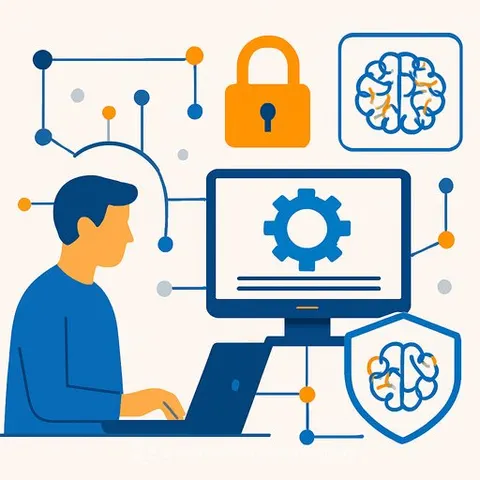
Agentic Security Operations Centers are moving beyond simple automation by adding memory architectures that let AI agents retain context and learn from past incidents. These systems use specialized agents for alert triage, threat intelligence, vulnerability management, and incident response - but the differentiator is how they coordinate and remember.
Traditional security automation treats each alert in isolation. Agentic SOCs don't. They combine short-term memory for real-time assessment, episodic memory for past events, and semantic memory for known threat knowledge. An alert triage agent can recall similar incidents from months ago. An incident response agent can maintain a full timeline of an investigation while following established protocols.
This matters for security teams drowning in alerts. Instead of starting from zero with each event, agents can compare new signals against accumulated institutional knowledge and respond faster.
Why fragmented data is a reasoning problem
Memory only works when agents have consistent data to draw from. That's the hard part. Alerts, threat intelligence, vulnerability records, and incident reports typically use different schemas that don't line up.
For an agent, this isn't just an integration headache. Incompatible taxonomies limit an agent's ability to correlate signals across domains and collaborate with other agents working on the same incident. The Open Cybersecurity Schema Framework (OCSF) is an industry effort to unify the data model, making cross-tool sharing work.
Speed through smarter inference
Memory is only half the story. The other half is inference speed. The article highlights Mini-SGLang, a lightweight framework for large language model workloads, which uses a few techniques to cut latency:
- Speculative decoding: a smaller model drafts multiple tokens ahead, accelerating text generation
- Streaming output: agents get partial results as they generate
- Overlap scheduling: CPU and GPU tasks run concurrently for better resource use
- Radix cache: repeated computations get reused, cutting redundant processing
These optimizations make real-time response possible. An agent that has to wait for a full inference pass can't keep pace with an active incident. One that can stream results and cache prior outputs can notify the human team sooner.
Security teams that want to build practical AI skills can start with the AI Learning Path for Cybersecurity Analysts, which covers threat detection and incident response workflows. For a broader view of how AI applies to operational roles, the AI for Operations tag offers additional context.
Why this matters for operations professionals
Agentic SOCs do not eliminate the security team. They change how the team works.
For operations leads, the practical takeaway is to test whether your SOC tooling actually remembers. Most security products claim AI capabilities now, but few retain a real incident timeline or correlate a new alert against last month's comparable event. When evaluating systems, ask two specific questions: does the agent hold memory from prior incidents, and can it share that context with other agents responding to the same event? If the answer is no, you may only have better search - not an operational improvement.