
AI news ·
Mississippi judge declines new sanctions over AI citation violations
A federal judge declined to add new sanctions against a Mississippi attorney who filed court documents containing AI-generated fake citations, ruling that penalties from a separate case already sufficed. The August 10 order addressed repeated AI errors across unrelated cases.
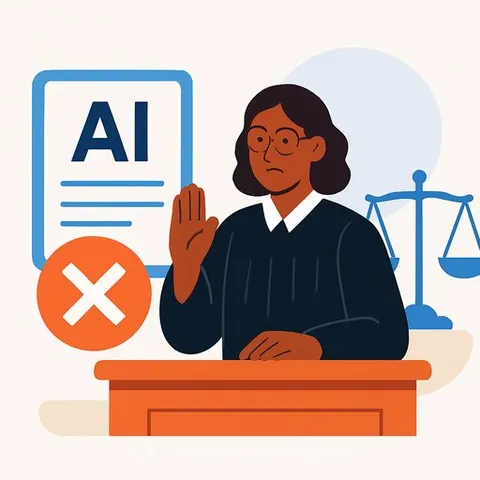
A federal magistrate judge in Mississippi declined to impose new sanctions on an attorney for filing court documents that contained fictitious legal citations generated by artificial intelligence, ruling that punishment already issued in a separate case was sufficient. The decision, filed August 10, addresses the growing challenge courts face when lawyers misuse AI tools and then commit similar violations in unrelated matters.
The ruling stems from sanctions imposed last year over the misuse of artificial intelligence in the Northern District of Mississippi. The judge found that those penalties were adequate punishment for "separate AI flubs entered in a different case around the same" time, according to the order.
AI citation errors and judicial response
The attorney had submitted legal briefs that included fabricated case citations and summaries generated by an AI tool. Those errors surfaced after opposing counsel or court staff checked the cited authorities and found they did not exist.
Magistrate judges have wide discretion in applying sanctions for such misconduct. In this instance, the judge concluded that the existing sanctions already imposed provided the necessary deterrence, despite the new allegations regarding similar AI-related errors in a separate proceeding.
Precedent for AI use in legal practice
This ruling underscores a broader pattern across federal courts, where judges are increasingly confronting the fallout of attorneys relying on generative AI without verifying its output. The American Bar Association has issued guidance reminding lawyers of their ethical obligations to supervise all work product, regardless of the tools used.
Legal professionals who incorporate AI tools into their workflow may benefit from structured AI for Legal resources that focus on responsible use and verification practices. Those in paralegal roles can also pursue an AI Learning Path for Paralegals, which addresses document review diligence and citation accuracy.
Avoiding repeat violations
Courts are not treating each mistake in isolation. When an attorney demonstrates repeated AI-related errors across separate cases, judges are weighing cumulative misconduct against the proportionality of sanctions. This Mississippi ruling signals that a judge may consider whether earlier punishment adequately reflects the full pattern rather than stacking new penalties.
Attorneys are well advised to implement internal review processes before filing any document that relied on AI for legal research, as the consequences of a single uncorrected false citation can damage credibility with the court.
Why this matters for legal professionals
For practicing lawyers and paralegals, this case offers a clear message: one instance of a judge's sanction for AI errors is not the end of the matter. Because a court can apply the existing sanction to new violations, a single reprimand may carry weight across multiple cases. The practical takeaway is to invest in verifiable AI workflows and training now, before an error surfaces in a second or third case and the judge runs out of patience.