
AI news ·
Modi calls for human-centric AI future built on trust, ethics at India AI Impact Summit
PM Narendra Modi urged a human-centred approach to AI at the India AI Impact Summit, proposing a global trusted data framework and a shift from "black box" to transparent "glass box" AI models. He warned against the "paperclip problem," insisting AI requires clear human values and guidance.
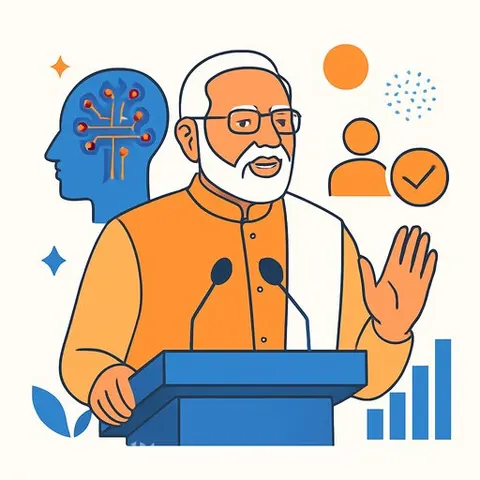
Prime Minister Narendra Modi called for a human-centred approach to artificial intelligence during his address at the India AI Impact Summit, urging nations to build AI systems that combine innovation with human values. Speaking at the Leader's plenary, Modi said India views AI as a shared resource for the benefit of all humanity, with a clear direction and vision for the technology's global development.
"When technology and human trust go hand in hand, the true impact of AI will be visible on the world," Modi said. He added that AI technology should be accessible to all and that it should be the goal of every nation, while noting that aspirational India has a large role to play in the global AI journey.
Three proposals for ethical AI development
Modi made three specific proposals for the ethical use of AI. First, he called for a global, trusted data framework for AI training that respects data sovereignty. "If the data used in AI systems is insecure, imbalanced, or unreliable, the outputs generated will lack trustworthiness," he said.
Second, he urged nations to shift from the "black box approach" to AI platforms toward a "glass box" model, where safety protocols are visible and verifiable. Modi argued that this transparency would promote ethical behaviour in business practices and foster trust in the use of AI.
Third, he raised the "paperclip problem" - the AI research scenario where a machine given the goal of making paperclips will continue doing so even at the cost of consuming all the world's resources. AI, he said, requires clear human values and guidance.
Drawing on Indian tradition
Modi referenced the timeless wisdom of Lord Buddha, stating that India, the land where Buddha attained enlightenment, stands as a beacon of peace and enlightenment to the world. He quoted the Buddha: "Right action comes from right understanding."
He said it is therefore critical that nations work together to create a roadmap that shows AI's true impact and that "true impact comes only when we take the right decisions at the right time." Modi added that humans have historically transformed every disruption into a new opportunity, and that today's AI moment is one such opportunity.
Why this matters for IT and Development
For IT and development professionals, the focus on data integrity and transparent safety protocols signals where regulatory attention will land. Evidence-based choices about data source evaluation, model accountability, and compliance-ready documentation are expected to become increasingly central to their responsibilities. This will help build systems aligned with the global standards being advocated at the summit, as reflected in the broader AI for IT & Development conversation. Similarly, AI for Government practices will likely shape the regulatory environment in which these professionals operate, aligning with the policies endorsed at the event.
Professionals should monitor how India's stated principles on data sovereignty and transparency translate into concrete regulations. Those building AI systems now should document their data sources and model safety processes, as those standards will likely become the baseline for future verification.