
AI news ·
More than a third of employees worry AI could make their jobs obsolete
A survey of 6,114 German workers shows 35% fear AI will replace them, hitting 49% for entry-level staff. Only 40% of employers offer meaningful training.
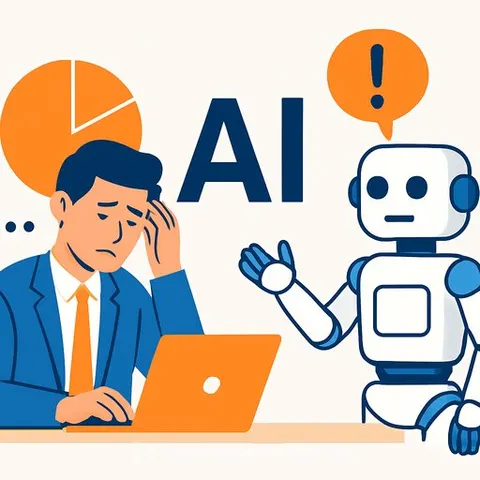
More than one in three employees in Germany worry that AI or automation could make their role obsolete, according to the Stepstone Hiring Trends Update 2026. The survey of 6,114 workers found that 35% hold this fear, a sentiment the study calls "Fear of Becoming Obsolete" (FOBO). For entry-level talent still completing vocational training, internships, or student placements, that figure jumps to 49% - more than double the 22% reported by managers.
Entry-level talent feels the sharpest threat
The contrast between career stages is stark. Nearly half of those just starting out believe AI could replace them in the medium term. Managers, with more established roles and often deeper strategic oversight, express far less concern. The data suggests that routine tasks common in early-career positions are seen as more susceptible to automation, leaving younger workers feeling exposed.
Upskilling surges as professionals respond
The anxiety is matched by action. Across all respondents, 76% feel pressure to continuously develop their skills to stay employable. Over the past year, 83% actively participated in professional development, and 35% of those focused specifically on AI applications. Dr. Christina Langer, Senior Economist at The Stepstone Group, sees this as a clear signal. "FOBO describes a very real feeling in today's labor market," she said. "At the same time, the data reveals something very encouraging: employees are not simply waiting to see what happens. They are actively engaging with new requirements."
Employers lag in providing support
While workers are taking initiative, companies are not matching their pace. Only 40% of employees say their employer offers meaningful opportunities to learn new skills. From the HR perspective, just 52% of HR professionals report that their organization actively invests in training or reskilling to meet future needs. Langer warned that cost-cutting job reductions could backfire. "AI must not become an excuse to write people off prematurely," she said. "Businesses that primarily cut jobs in response to short-term cost pressure will exacerbate their own skills shortages in the long term."
Why this matters for IT and Development professionals
For those in IT and development roles, the message is direct: technical skills alone are no longer a static asset. The rapid adoption of AI means that tasks once considered future-proof are now in flux. Fear of obsolescence can be turned into a competitive advantage when professionals zero in on targeted training, such as AI for IT & Development programs that bridge current expertise with emerging tools. The decline in employer-provided training makes individual initiative even more critical. The professionals who treat AI not as a threat but as a core skill to master will be the ones shaping the next wave of systems, not being replaced by them.