
AI news ·
NEA RegLab project finds AI explainability insufficient for high-stakes nuclear safety applications
Seven countries completed the first phase of RegLab, an international project testing AI for real-time nuclear plant monitoring. Regulators found AI must provide auditable reasoning, not just explanations, and that data quality outweighs volume.
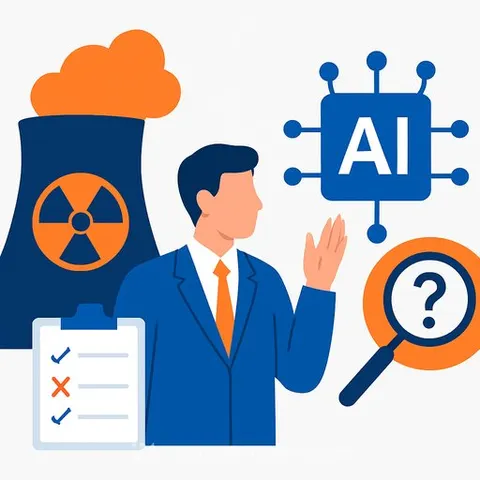
Nuclear regulators and operators test AI for power plant monitoring
Seven countries have completed the first phase of an international project examining how artificial intelligence can safely monitor nuclear power plant operations in real time. The Nuclear Energy Agency released the findings on 2 April 2026, providing the first concrete guidance on what regulators need to see before approving AI systems in the nuclear sector.
The RegLab project brought together nuclear regulators, plant operators and technology developers to test an AI system designed to detect anomalies in operational data. The approach mirrors regulatory sandboxing used in finance and aviation-a controlled environment where stakeholders can identify problems before deployment.
What the testing revealed
Participants identified two critical barriers to deploying AI in nuclear plants. First, explainability alone is not enough. An AI system must show its reasoning with quantifiable, auditable evidence that regulators can verify. Second, data quality matters more than data volume. High-quality, well-governed datasets that represent real operational conditions are essential to building a credible safety case.
The project found potential benefits in AI-assisted monitoring: improved safety margins, faster detection of operational deviations and potential cost reductions. But these gains depend on rigorous technical justification that meets nuclear regulatory standards.
What comes next
The report recommends five priorities for developing an AI assurance framework:
- Standards for verifying and validating AI systems
- Clear boundaries on which nuclear applications can use AI
- Risk management approaches that maintain defence-in-depth
- Training programs for both AI developers and nuclear staff
- Standardized data structures across the industry
Regulatory bodies from Canada, France, Japan, South Korea, Spain, the UK and the US participated in RegLab #1. The project is continuing with additional use cases, with results expected to inform how nuclear operators worldwide integrate AI into safety systems.
The full report is available on the Ennuvo website.