
AI news ·
New York teachers union demands statewide artificial intelligence rules after district pauses robot teacher
A New York district paused plans to use an AI robot in classrooms within 24 hours of backlash. The state teachers union now demands enforceable statewide rules for school AI.
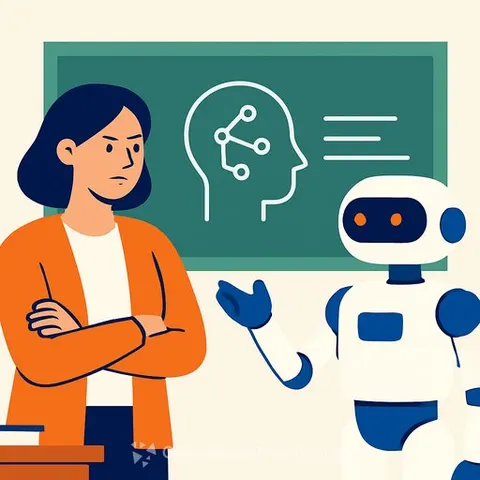
A western New York school district's plan to place an AI-powered robot in a high school classroom collapsed this month after a union pushback and a state inquiry, prompting New York's teachers union to demand enforceable statewide rules for artificial intelligence in public schools. The episode reveals how quickly a local tech experiment can escalate into a policy fight when no regulations exist to govern humanoid AI in educational settings.
The "Sally" robot that sparked a state-level debate
Salamanca City School District in Cattaraugus County intended to deploy a female-appearing robot named Sally, built by Realbotix, as a teaching aide in its high school. The robot featured silicone skin, long brown hair, a moving upper body, and a proprietary AI platform designed to interact with students and provide educational assistance. The district planned to use Sally in its AI and robotics courses, which aim to prepare students for careers in the tech field. A web-based platform would also let students engage with the AI away from the physical robot.
News of the project, first reported by New York Focus, drew swift criticism. The New York State Education Department met with district leadership, and within 24 hours the district announced the project was paused. But for the union representing the state's public school teachers, the pause only highlighted a deeper problem: there is no legal framework to stop a district from moving forward with such a tool.
Union demands guardrails before any AI enters classrooms
In a letter to Education Commissioner Betty A. Rosa, NYSUT President Melinda Person said the union opposed the robot's introduction because it happened without community input and because technology in classrooms can often harm learning. She argued that even the current review process is insufficient.
"What stopped the robot was not law, it was not regulation," Person wrote. "It was not any policy of the state of New York, because no such policy exists. It was an investigative news story, the parents and educators who read it, and a Commissioner's letter. Had those pieces not fallen into place, 'Sally' would be seated in front of students this September and nothing on the books would have required a single question to be asked first."
Person then listed questions that she said should have been answered before the district acted. They include whether the robot meets safety, security, and licensing standards; whether it would report abuse it witnesses; what data safety and monitoring rules Realbotix follows; and how the platform would be prevented from "hallucinating" incorrect information, a common flaw in current AI models.
The union is calling on the Department, the Board of Regents, the governor, and the legislature to establish clear, enforceable statewide guardrails for AI in schools, with heightened protections whenever the technology is "humanoid, embodied or designed to mimic human relationships."
Person stressed that the union is not opposed to students learning about AI. She said students should work with the technology in specific ways - learning how to build it, how it works, and how to use it effectively. "That is profoundly different from installing a machine designed to befriend children, and our state's rules should know the difference," she said.
Why this matters for educators
The Salamanca case shows that the absence of statewide AI policies leaves individual districts to make high-stakes decisions about student-facing technology without clear safety, privacy, or pedagogical standards. For teachers and administrators, the push for guardrails signals that humanoid AI tools will likely face far more scrutiny than software-based learning aids. Anyone involved in edtech procurement or curriculum planning should expect that questions about data handling, algorithmic transparency, and the appropriateness of anthropomorphic design will become central to future adoption decisions - and that state-level mandates may arrive sooner than many districts anticipate.