
AI news ·
Nolla Health launches AI-issued initial acne prescriptions in Utah under state regulatory agreement
Utah authorized AI to issue initial acne prescriptions without a doctor's review for adults 18 and older, starting with a $49.99 home-delivered compounded medication option.
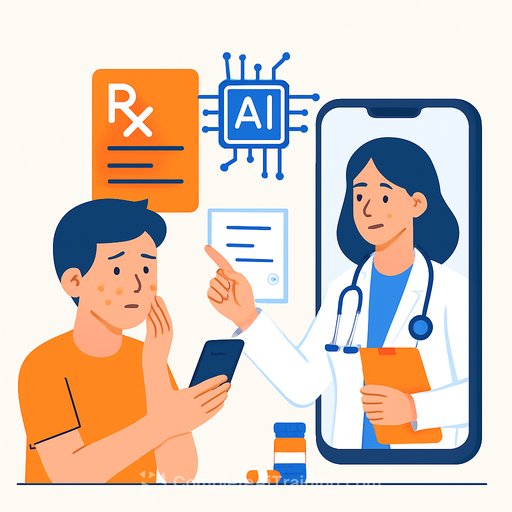
Nolla Health launched AI-issued initial acne prescriptions in Utah on October 5, 2026, under a 12-month regulatory agreement with state agencies. The pilot allows adults 18 and older to receive AI-generated diagnoses and topical medication prescriptions without direct human oversight - the first such authorization in the United States for initial prescriptions rather than refills.
The Nolla Derm app uses a severity-scoring model trained on over 100,000 labeled acne cases. It achieved an R-squared of 0.947 on a held-out test set of 10,348 cases, and clinician agreement ran at approximately 96% in recent real-world treatments. The agreement involves the Utah Office of Artificial Intelligence Policy and the Division of Professional Licensing, which provide regulatory mitigation but not formal state endorsement.
How the oversight structure works
Physician review follows a stage-gated model designed to scale back human involvement as safety data accumulates. For the first 100 patients, physicians review every AI-generated prescription. That shifts to retrospective review for up to 500 patients. After that threshold, clinicians review a monthly 10% sample plus any adverse events.
The formulary, reported only by Unite.ai, includes tretinoin, adapalene, clindamycin with benzoyl peroxide, benzoyl peroxide, azelaic acid, and compounded versions with niacinamide or topical spironolactone in two formulations. Pricing splits between a $49.99 home-delivered compounded medication option and generic equivalents costing $10 to $40 at local pharmacies.
What the model's performance data shows
The R-squared value of 0.947 indicates the model's severity assessments closely track clinician judgments on the test data. High agreement rates in real-world treatments suggest the system performs consistently outside controlled conditions, though the pilot's staged oversight acknowledges that real-world deployment introduces variables no test set captures.
The company has not disclosed demographic breakdowns of the training data or error patterns across skin types - factors that will draw scrutiny as the pilot progresses and retrospective reviews accumulate.
Why this matters for healthcare, insurance, and product development professionals
This pilot establishes a regulatory template for AI-issued initial prescriptions, moving beyond the refill-only models that have dominated telehealth AI deployments. For insurers and pharmacy benefit managers, the formulary's mix of generic and compounded options raises questions about coverage determinations when an AI - not a physician - initiates the prescription. Product teams building clinical AI tools should watch how Utah's stage-gated oversight framework handles liability and adverse event reporting, as those mechanics will shape compliance requirements in future state agreements. Professionals working in regulatory affairs may find relevant training through AI Regulatory Compliance Courses that cover emerging frameworks for AI in clinical settings.