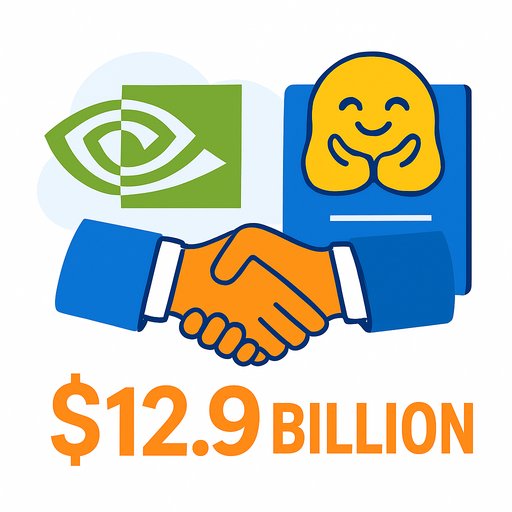
Nvidia has acquired Hugging Face, the leading open-source AI model repository, for an estimated $12.9 billion, according to The Information. The deal brings together the dominant AI chip maker with the central hub where developers share and deploy pre-trained models, datasets, and tools for natural language processing, computer vision, and other AI workloads.
Initial reports from Business Insider indicated talks for a deal exceeding $13 billion. The Information later reported the agreement was finalized at $12.9 billion. Neither company has issued a public statement at the time of writing.
Why Nvidia bought Hugging Face
The acquisition marks a strategic shift for Nvidia, which has built its AI dominance on hardware. By owning Hugging Face, Nvidia gains direct access to a massive community of AI developers and a critical piece of the AI development workflow. That positions the company to optimize its GPUs for the open-source models developers actually use, and potentially influence the direction of open-source AI development.
The deal also reflects the rising value of AI software and platforms. As models grow more complex, the infrastructure for building, sharing, and deploying them becomes more commercially important. Hugging Face's success in fostering an open-source ecosystem made it an attractive target for major tech players looking to secure their place in the AI market.
What the deal means for open-source AI
The acquisition could accelerate integration between hardware and software, potentially leading to more efficient AI solutions. But it also raises questions about open-source neutrality and the risk of vendor lock-in. Developers who rely on Hugging Face may see deeper integration with Nvidia's tools and hardware, which could improve performance on Nvidia GPUs while also shaping the platform's future direction.
For the broader industry, the deal signals that control over AI infrastructure - both chips and the software layer - is becoming a central competitive battleground. Companies building on Hugging Face should watch for official announcements from both firms about the platform's open-source commitments, service terms, and roadmap.
Why this matters for IT and development professionals
If your team uses Hugging Face to find models or deploy AI features, this deal changes the calculus. Nvidia has a clear interest in keeping the platform healthy, but the integration will likely tie model performance more closely to Nvidia hardware. That could mean better results on Nvidia GPUs and more friction elsewhere.
Developers should also expect changes to how models are distributed and validated. For those building AI applications, staying current with the platform's evolving tooling and policies is part of the job. If you're just starting to work with open-source models, an AI Learning Path for Software Developers can help you build the practical skills to navigate this shifting landscape. For broader context on how these changes affect your day-to-day work, the AI for IT & Development section tracks developments relevant to your role.
Hugging Face has become indispensable to the AI development workflow. Who owns it, and how they choose to run it, now matters to every team building on open-source models.
Your membership also unlocks: