
AI news ·
Oracle expands defense ecosystem and healthcare AI partnerships
Oracle added Baystate Health and Theator for clinical AI and launched its third Defense Ecosystem cohort. Both moves target regulated sectors requiring strict compliance.
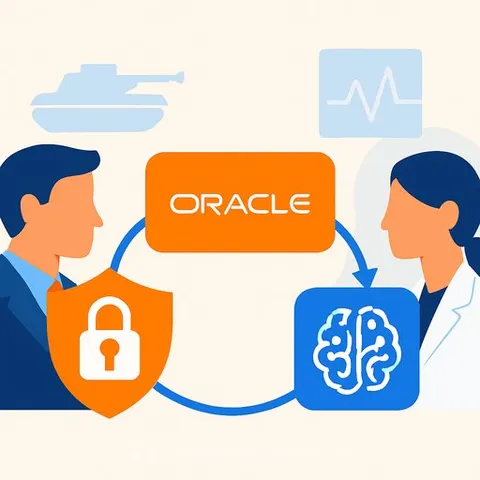
Oracle has struck new healthcare AI partnerships with Baystate Health and surgical intelligence firm Theator, targeting clinical operations, patient engagement, and automated documentation. The cloud giant also launched the third cohort of its Defense Ecosystem, adding AI, cybersecurity, and edge computing companies to support national security programs. Both moves extend Oracle's reach into regulated, mission-critical industries where compliance and reliability are non-negotiable.
Clinical AI gains real-world traction
Oracle Health's work with Baystate Health and Theator signals growing deployment of the company's AI in direct patient care settings. The partnerships focus on putting Oracle's cloud and AI tools to work inside clinical workflows - from streamlining documentation to improving how providers interact with patients. These applications fall under the broader umbrella of AI for Healthcare, where adoption is accelerating across provider organizations. Theator, a surgical intelligence company, adds a layer of AI-driven analysis in the operating room, while Baystate Health, a Massachusetts-based health system, aims to modernize its patient engagement and administrative processes.
Defense ecosystem widens
Separately, Oracle added a new wave of partners to its Defense Ecosystem, bringing in firms that specialize in AI, cybersecurity, and edge computing for defense and allied missions. This cohort ties Oracle's infrastructure more tightly to national security projects where data sovereignty, uptime, and compliance are critical. While not directly healthcare, the overlap matters for integrated care systems in military and veterans' health environments.
Infrastructure deals signal momentum
Oracle's recent string of AI infrastructure agreements, often in regulated sectors, provides the backbone for these vertical moves. The company's cloud and AI tools are being chosen for workloads where security and auditability rank above cost or convenience. For healthcare CIOs and IT leaders, the trend points to a vendor trying to position itself as a trusted platform for sensitive patient data and AI-assisted clinical decisions.
Why this matters for healthcare professionals
As Oracle gains ground with health systems like Baystate Health, clinicians, IT teams, and administrators will encounter its AI tools embedded in EHR workflows, patient communication channels, and documentation processes. Understanding how these systems operate - and their limitations - is becoming as essential as learning a new medical device. For non-technical staff, the shift means more time back from paperwork, but it also demands familiarity with AI-driven decision support that can affect patient outcomes.