
AI news ·
Oracle Health introduces clinical AI agent for nurses to cut down on charting and record navigation
Oracle Health embedded a Clinical AI Agent for nurses into its EHR, using voice commands to search charts and capture data like weight and blood pressure in real time. The tool aims to cut after-hours charting that pulls nurses from direct patient care.
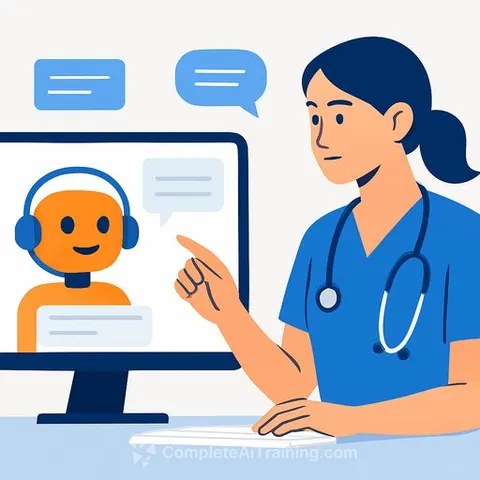
Oracle Health has extended its Clinical AI Agent to nurses, a move that embeds automated chart navigation and voice-driven documentation directly inside the company's electronic health record. The expansion targets the administrative creep that pulls nurses away from patients and into after-hours charting.
"This can take time away from direct patient care and contribute to after-shift charting," Oracle Health said in an interview on Thursday. The agent, already in use by physicians across the US, now gives nurses tools to search patient records with natural language commands, generate AI-powered summaries of a patient's condition, and dictate discrete data points like weight, blood pressure, and symptoms in real time.
How the agent fits into a nurse's workflow
Rather than clicking through menus to find a specific lab result or history, nurses can speak a query and pull up the relevant chart instantly. The summaries let them grasp a patient's status without a full manual review. Voice-enabled discrete charting captures structured data on the spot, cutting down the documentation that often piles up at shift's end.
The system keeps nurses in the loop on accuracy. "The agent is intended to assist nurses, while keeping them in control of reviewing and approving the resulting documentation," Oracle Health said. No entry goes into the EHR without a clinician's sign-off.
Where this fits among other nursing AI tools
The announcement lands in a busy stretch for nursing-focused AI. Lifepoint Health began piloting ambient listening technology earlier this month to automatically document nurse-patient conversations. The company is also testing AI agents that could help nurses prioritize patient assignments before a shift starts. Hippocratic AI offers a Nurse Co-Pilot voice assistant that calls patients directly to cover discharge preparation, medication details, and post-discharge care, with clinical notes documented automatically afterward.
Oracle Health's agent differs by living inside the Oracle Health Foundation EHR itself. Nurses do not toggle between separate applications. "This embedded approach helps reduce context switching and keeps nurses in control while fitting AI into the systems and processes they already use," Oracle Health said. For healthcare operations leaders tracking workflow efficiency, that integration matters - it removes the friction of adopting yet another standalone tool. Professionals looking to build internal expertise on these technologies can explore AI Agent Courses that cover how agent-based automation is being deployed across clinical and operational settings.
Why this matters for healthcare and operations leaders
Administrative burden remains one of the top drivers of nurse burnout and turnover. Tools that shave minutes off chart navigation and documentation per encounter compound quickly across a unit or hospital system. Oracle Health's embedded approach also signals a broader shift in EHR strategy: rather than bolting AI onto the periphery, vendors are weaving it into the core clinician experience. For HR and operations directors, the question becomes less about whether AI will enter nursing workflows and more about how to govern it - ensuring clinicians retain final authority over documentation while measuring whether the time savings actually translate to more bedside care.