
AI news ·
Parker turns viral anti-AI pen spec ads into real Times Square billboards
A freelance copywriter's anti-AI spec ad for Parker Pen sparked a global creative challenge that led to a real Times Square billboard. Parker turned hundreds of unsolicited submissions into a live display in one of the world's most expensive ad venues within weeks.
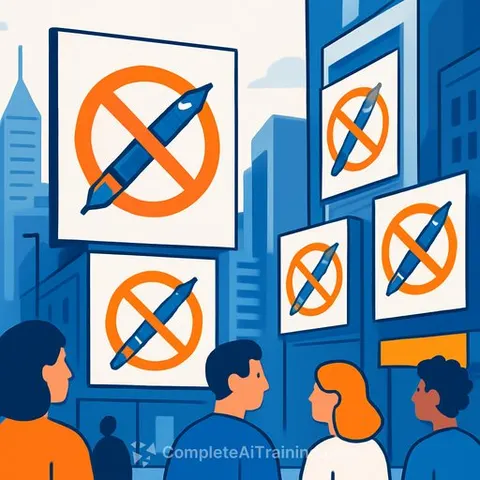
Kushagra Oberoi, a freelance copywriter and creative strategist, posted an unsolicited spec ad for the Parker Pen Company on LinkedIn. The concept - an anti-AI campaign that reframed the ballpoint pen - drew thousands of likes and sparked an unplanned creative competition. Parker responded by turning the winning ideas into a real digital billboard in Times Square.
The company's social media team saw the momentum and chose to engage rather than ignore it. They offered prizes for the best entries, and the challenge generated hundreds of submissions from creatives around the world. The billboard went live in New York, closing the loop from a single LinkedIn post to a physical ad placement in one of the world's most expensive advertising venues.
How a LinkedIn post became a brand campaign
Oberoi's original post criticized AI's role in creative work while positioning a simple pen as a tool of authentic human expression. The copy resonated immediately. Within days, other creatives began posting their own Parker spec ads, and the hashtag-driven challenge took shape organically.
Andrew MacAskill, founder of One Minute Briefs, helped structure the competition. Parker's marketing team moved quickly to formalize prizes and select winners. The speed of the response mattered - the gap between viral post and billboard placement was measured in weeks, not months.
What appeared on the Times Square billboard
The winning designs carried the same anti-AI sentiment that launched the challenge. One featured the line "Written by hand, not by AI." Another emphasized the permanence of ink against the ephemeral nature of generated text. Parker ran the ads on a high-resolution digital display in a location that commands millions of impressions daily.
The campaign cost Parker far less than a traditional agency-led Times Square buy. The creative was crowdsourced. The media placement was targeted. The earned media from the stunt itself amplified the reach beyond the billboard's physical audience.
Why this matters for creatives
Spec work rarely gets bought. This case breaks that pattern, and it shows how a brand with attentive social media management can spot and reward unsolicited ideas. For creatives building portfolios, the takeaway is practical: a well-timed LinkedIn post aimed at the right brand can lead to paid work, real-world placements, and visibility that a portfolio site alone won't deliver.
The campaign also demonstrates that brands willing to engage with AI for Creatives debates - rather than avoid them - can generate authentic attention. Parker didn't commission a polished corporate stance on AI. It amplified a conversation creatives were already having, and it paid to put the result on a billboard. For designers looking to sharpen the skills that make campaigns like this possible, AI Design Courses offer structured ways to blend traditional craft with emerging tools.