
AI news ·
Philadelphia school uses AI chatbots to build student confidence in language learning
Springside Chestnut Hill Academy is embedding AI into its curriculum as a learning partner, using chatbots for French practice and teaching students how the technology works. The school began exploring AI three years ago, emphasizing it supplements-not replaces-human instruction.
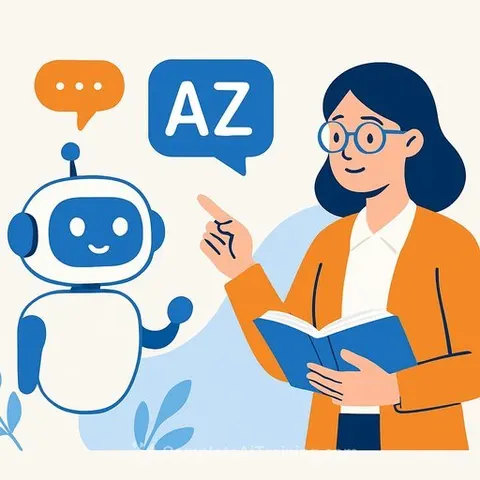
As Philadelphia students return to class this fall, Springside Chestnut Hill Academy is embedding artificial intelligence into its curriculum as a learning partner rather than a teacher replacement.
The school's language department offers one example: students practice French conversations with an AI-powered chatbot that responds in real time and asks follow-up questions designed to push them toward more complete answers.
"They like that they get this immediate feedback and follow-up questions to help them think through how they can answer a little more completely," one teacher said.
The technology has proven especially useful for students who are hesitant to speak in front of classmates. One teacher recalled a student who felt more comfortable sharing personal details with the chatbot than she would have in front of the entire class. "She didn't want to share who she was going with … she didn't want to hurt other people," the teacher explained.
Teaching the technology behind the tools
Springside Chestnut Hill began exploring AI about three years ago. Since then, the curriculum has expanded beyond using AI tools to understanding how they work.
Scott Kirker, who teaches AI, coding, and entrepreneurship, emphasizes that knowing the underlying mechanics matters as much as the user experience. "If you want to build anything with AI, it needs a lot of good data," Kirker said.
During a classroom demonstration, Kirker showcased facial recognition software similar to the technology used to unlock smartphones and verify identities. When a reporter tested the system, the software misinterpreted her facial expression - a reminder that AI is only as accurate as the data it's trained on.
Teachers and school leaders stress that AI is meant to enhance learning, not replace the human elements of education. "AI doesn't have to be the human interaction … the critical thinking skills to learn and grow," said Matt Norcini.
For educators looking to bring similar tools into their classrooms, resources like AI for Education offer guidance on integration strategies. The school's approach also aligns with an AI Learning Path for Teachers that focuses on using the technology as a classroom aid.
"This is going to be a fundamental part of our future," Kirker said.
Why this matters for educators
For teachers, the key takeaway is that AI works best as a supplement to instruction, not a substitute for it. The chatbot example shows how AI can give students low-pressure practice opportunities while freeing teachers to focus on the interpersonal skills that machines cannot replicate.