
AI news ·
Pope Leo XIV Warns AI Threatens Human Dignity, Echoing Legacy of Pope Leo XIII
Pope Leo XIV identifies artificial intelligence as a key challenge affecting human dignity, justice, and labor. He calls for ethical frameworks and global cooperation on AI.
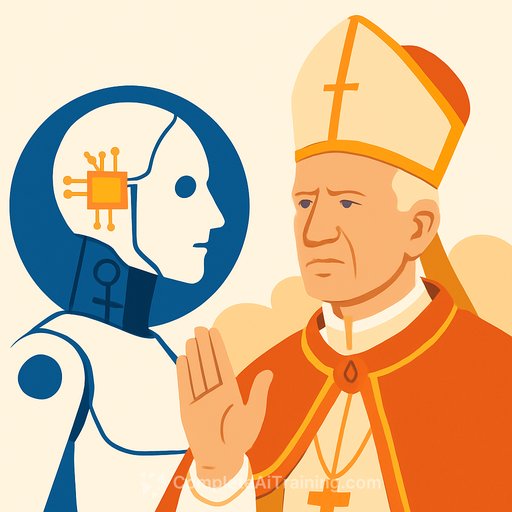
Pope Leo XIV Highlights Artificial Intelligence as Humanity’s Key Challenge
Pope Leo XIV has set a clear direction for his papacy, identifying artificial intelligence (AI) as one of the foremost challenges facing humanity today. During his first formal audience with the cardinals who elected him, the new pontiff emphasized the importance of addressing AI's impact on human dignity, justice, and labor.
The pontiff’s choice of the name “Leo” draws a direct connection to Pope Leo XIII, who served from 1878 to 1903 and focused on workers' rights amid the industrial changes of his era. Similarly, Pope Leo XIV sees parallels between that period's industrial revolution and the current developments driven by AI. His message stresses the church's role in offering social teachings to respond effectively to these modern challenges.
Continuing the Legacy of Social Concern
Leo XIV expressed a strong commitment to uphold several core priorities established by his predecessor, Pope Francis. Towards the later years of his pontificate, Pope Francis increasingly spoke out about the potential risks AI poses to humanity and advocated for international regulations to govern its development and use.
In his remarks, Pope Leo XIV said, “In our own day, the church offers everyone the treasury of its social teaching in response to another industrial revolution and to developments in the field of artificial intelligence that pose new challenges for the defence of human dignity, justice and labour.”
First Steps Outside the Vatican
Shortly after his election, Pope Leo XIV visited the tomb of Pope Francis and a sanctuary located south of Rome. These visits marked his initial journey outside the Vatican, symbolizing continuity and respect for his predecessor’s legacy.
Why This Matters to Science and Research Professionals
- Ethical Considerations: The church’s engagement with AI highlights the growing need for ethical frameworks in technology development.
- Labor and Justice: As AI reshapes industries, concerns about labor rights and social justice become increasingly relevant.
- Global Cooperation: Calls for international treaties on AI reflect the recognition that technology's impact transcends borders.
For those working in AI and related fields, this papal perspective reinforces the urgency of responsible innovation and the integration of human values in technology design.
To explore practical AI courses and certifications that emphasize ethical AI development, consider resources like Complete AI Training's latest AI courses.