
AI news ·
Preparing the next generation of teachers for AI is the new essential
Teacher prep programs now train new educators to use AI responsibly, moving beyond fear toward practical classroom integration. The focus is on evaluating accuracy, protecting student privacy, and using AI as a partner-not a replacement-for core teaching work.
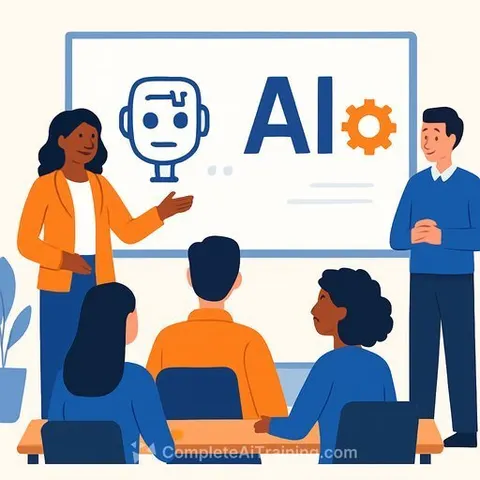
Artificial intelligence has entered classrooms with the same mix of promise and uncertainty that accompanied the internet, interactive whiteboards, and 1:1 device initiatives. For the educators now preparing tomorrow's teachers, the question is no longer whether AI will influence teaching and learning. It's whether new teachers will be prepared to guide its responsible use.
An instructor who works with both pre-service teachers and veteran educators said much of the current work focuses on helping teachers understand AI and use it effectively alongside other tools and strategies. The goal is to move educators from uncertainty to curiosity, and to show that AI is not about doing the work of teaching for them. "It is about expanding what they are able to do for their students," the instructor said.
AI as a teaching partner
AI won't replace the core of teaching - the relationships, encouragement, creativity, and care educators provide daily. But it can function as a practical partner. When used thoughtfully, AI helps teachers save time on routine tasks, generate lesson ideas, differentiate instruction, and create more personalized experiences for students.
That distinction matters for educators weighing whether AI adoption means sacrificing quality. The instructor framed it as a tool for success, not a tradeoff. Teachers who have had the greatest impact over the years were not necessarily the first to master new technology. They were the ones who remained curious, adaptable, and focused on students.
What new teachers need to know
For the next generation of teachers, understanding AI will be essential rather than optional. That means learning not just how to operate AI tools, but how to evaluate their accuracy, weigh ethical implications, protect student privacy, and decide when these tools actually support learning.
Educators preparing to enter the profession need practical training that covers these skills. Programs like AI for Teachers offer guidance on integrating classroom tools and lesson planning. Broader resources on AI for Education help schools adopt the technology responsibly.
The instructor, who began teaching when classroom technology looked very different, never imagined helping teachers collaborate with artificial intelligence. But the mission remains unchanged: to use every available tool to help students learn and grow.
Why this matters for educators
Teachers who build familiarity with AI now will be better positioned to shape how it's used in their schools. The task is not to fear innovation but to gain the knowledge and confidence to guide it. AI can support a teacher's work, but it cannot replace the human connection at the center of teaching and learning.