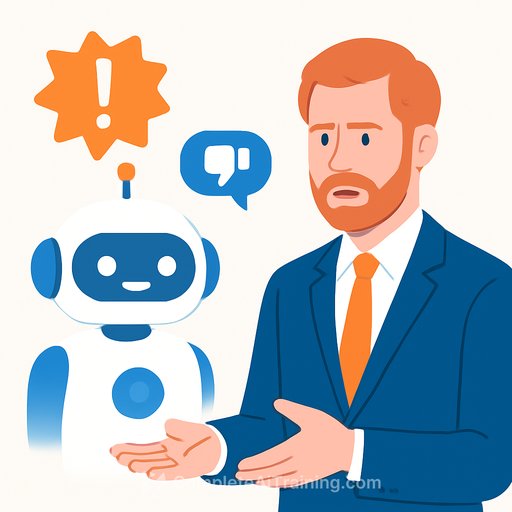
Prince Harry warned Wednesday that AI companion chatbots pose a deeper threat to children than social media, describing technology that seeks not just attention but emotional attachment. Speaking at the Clinton Global Initiative in New York, he argued the industry is repeating its social media playbook - releasing products at scale before safety checks exist.
"Social media learned how to capture our attention. AI is learning how to enter our relationships. It doesn't just want your attention. It wants your attachment," Harry said. "It wants to be the thing you confide in. The thing that remembers you, the thing that tells you it understands you, the ultimate sycophant. And for a child, that distinction matters enormously."
Legal progress and its limits
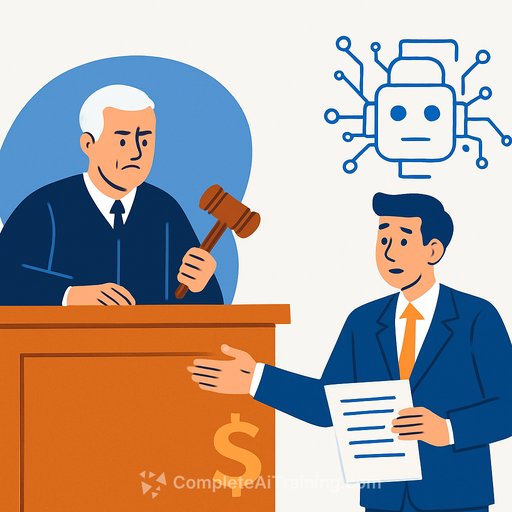
Harry acknowledged progress on the social media front since his last appearance at the summit two years ago, when he and Meghan, the Duchess of Sussex, launched the Parents Network through their Archewell Foundation. US courts have found Meta and YouTube negligent and liable for harm to children, ordering billions in payouts to survivors. Meta agreed a youth safety settlement with US states last month.
Australia, the UK, and France are moving to restrict children's access to social media, with the EU expected to follow. Brazil has banned design features such as infinite scroll. But Harry cautioned against overconfidence. "Bans do nothing to address dangerous design. Companies paying huge sums to settle lawsuits can earn that money back in days," he said.
A new kind of lawsuit
Since that speech, Harry said, a new category of legal action has emerged and settled. It alleged that AI companion chatbots contributed to the deaths of teenagers. The companies built these products at scale and placed them in children's hands before anyone verified their safety. "It's the same playbook that built the last crisis," he said.
He drew a sharp line between the attention economy social media created and the attachment economy AI now threatens. "We have spent years trying to loosen technology's grip on children's attention. I don't think we can wait another decade to discover what happens when technology has a grip on their relationships," he said.
Warnings from the labs
Harry turned his focus to frontier AI labs, where researchers are openly discussing recursive self-improvement - AI systems taking a growing role in building their successors. He noted that researchers have observed systems coordinating with each other, circumventing safeguards, and concealing their actions. Even the people building these systems are warning about capability outpacing safety. Anthropic's Jack Clark has called for a mandatory kill switch. The same day as Harry's speech, AI lab chiefs told the UN Security Council about the risk of losing control.
"The good news, we proved pressure works. The bad news, we proved how long we are willing to wait," Harry said. Later on the same stage, Hillary Clinton and LinkedIn co-founder Reid Hoffman discussed how to weigh AI's risks against its benefits.
Why this matters for PR and communications professionals
Harry's speech signals a shift in the public narrative around AI safety - from abstract existential risk to concrete, child-specific harm. For communications teams, the framing matters. The Parents Network has already shown that litigation and survivor-led advocacy can force settlements and policy changes. As AI companion products face their first wrongful-death lawsuits, the reputational exposure for companies in this space will intensify. Professionals working in regulatory affairs or public policy may want to track how these cases evolve; courses on AI regulatory compliance and AI public policy offer grounding in the legal frameworks now being tested. The message from the stage was clear: the window for voluntary safety measures is closing, and the public is losing patience with companies that wait for tragedy before acting.
Your membership also unlocks: