
AI news ·
Property management firms turn to AI tools to improve maintenance workflows and tenant communication
Property managers are turning to AI to consolidate scattered workflows-maintenance tracking, tenant communication, compliance records-across growing portfolios. The focus is reducing admin friction, not cutting staff.
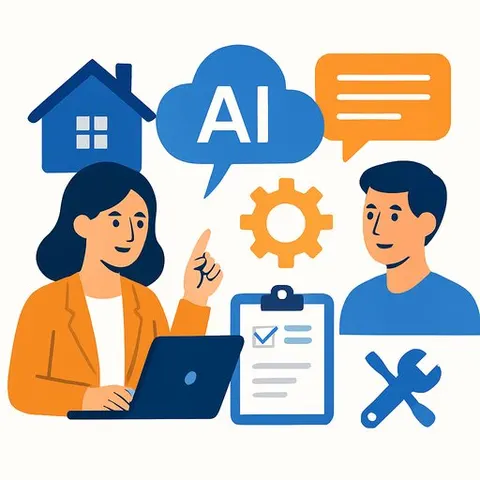
Property managers are adopting AI to organize fragmented workflows, not replace staff
Property management operations are becoming more complex. Landlords and housing providers now juggle larger tenant bases, faster communication expectations, expanding compliance requirements, and scattered maintenance coordination across multiple systems. Rather than seeking full automation, many are exploring AI tools to reduce administrative friction and improve consistency.
The shift is gradual. Most property managers aren't looking to eliminate their teams. They're looking for systems that centralize communication, reduce manual work, and give them better visibility into what's happening across their properties.
The fragmentation problem
Many property management operations still rely on spreadsheets, disconnected reporting tools, and reactive maintenance coordination. As portfolios expand, this approach breaks down.
Maintenance requests live in one system. Tenant communication happens in another. Contractor schedules exist elsewhere. Compliance documentation sits on different platforms. The result: delays that have nothing to do with actual maintenance problems.
A maintenance team might not have access to recent tenant communication. Reporting standards might differ between properties. A contractor scheduling request could get lost between departments. These inefficiencies compound as operations grow.
What property managers actually want from AI
Property management AI systems are being explored to address specific operational needs:
- Tenant communication workflows
- Maintenance tracking and coordination
- Contractor scheduling
- Reporting visibility
- Compliance documentation
- Workflow organization across multiple properties
The goal is consistency and visibility, not replacement. A AI Agents & Automation system that centralizes maintenance requests, tracks communication history, and flags compliance issues reduces the friction that slows operations down.
For managers handling multiple properties, the administrative workload from tenant communication alone-coordinating with contractors, scheduling maintenance, updating records, responding to requests-becomes unwieldy. Better organization reduces that burden.
Why this matters for management professionals
Operational pressure on property managers continues to increase. Response times matter more. Tenant expectations are higher. Regulatory requirements keep expanding. At the same time, portfolios are growing.
Many property management firms are competing on operational quality, not just price. The firms that respond faster, maintain better records, and coordinate maintenance more smoothly win more business and keep tenants longer.
AI tools that improve workflow visibility and reduce manual administration directly support those competitive advantages. They also reduce the chance of missed deadlines or lost communication-problems that damage reputation and create liability.
The practical direction
Industry observers expect AI in property management to integrate quietly into existing systems rather than replace them entirely. Automation would work in the background-organizing tenant requests, tracking maintenance status, flagging compliance issues-while managers maintain full oversight and control.
This differs from the "full automation" narrative often attached to AI. Property managers need to stay involved in decisions. They need to understand what's happening across their operations. The goal is removing administrative friction, not removing the manager.
As operational demands continue rising across housing and real estate, systems that improve communication consistency, maintenance coordination, and reporting visibility will likely become standard infrastructure. The question for most managers isn't whether to adopt these tools, but which ones fit their specific operational structure.
Learn more about how AI supports AI for Management and operational decision-making.