
AI news ·
Research Arts uses custom software and traditional CGI to create robotic film 'AUTOMATIC'
Research Arts released 'AUTOMATIC,' an experimental film using custom AI tools for ideation while keeping every final creative decision under human control.
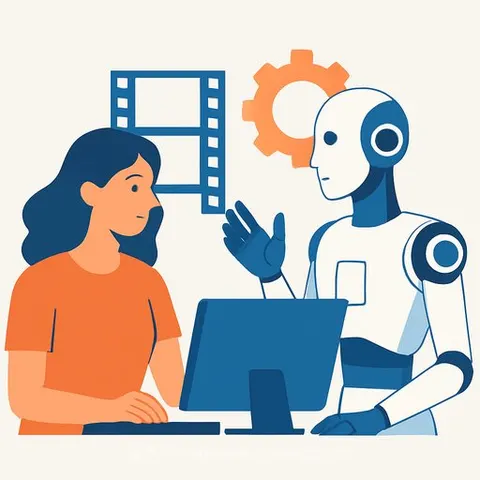
Creative technologist and director Research Arts has released 'AUTOMATIC,' an experimental film that builds its visual language through a hybrid of traditional CGI and custom AI-assisted workflows. The project, represented by Studio Private, arrives as creative industries continue to debate whether machine learning tools threaten or expand artistic practice. The film offers a concrete example: AI handled early experimentation and ideation, while every final creative decision stayed under human control.
How the hybrid pipeline worked
'AUTOMATIC' was not generated by prompting an off-the-shelf model. The team wrote custom software that let them rapidly test the mechanics of robots and abstract forms. Those AI-driven explorations produced unexpected visual references and accelerated the discovery phase. Artists then rebuilt and refined the results using traditional CGI, compositing, and colour grading.
Research Arts described the shift in process: "We wrote software that made it very rapid to experiment with the mechanics of the robots as well as the pieces. This made what would usually be an intensive technical process feel more like painting or illustrating abstract forms direct from the mind." The custom tools turned a typically rigid technical pipeline into something closer to sketching.
Artistic control remains the anchor
The project consciously avoids the aesthetic that has become associated with Generative Video tools. Instead of letting the model dictate the final look, Research Arts used AI as a sandbox for discovering forms that human judgement later shaped. Bianca Redgrave, managing director at Studio Private, said, "Technology can generate endless possibilities, but it can't replace artistic judgement. We are able to bring an element of creativity from the onset when working with global brand's visions, applying craft to turn those discoveries into something original and authentic."
The film started as a self-initiated exploration of machine aesthetics. That origin gave the team freedom to treat the technology as a collaborator in the early stages, not a shortcut to a finished product. The approach preserves what the studio calls "creative intent" - a term that matters when clients ask whether AI-assisted work still carries a distinct authorial voice.
A different entry in the AI debate
Industry conversations about AI often split into two camps: those who see it as an existential threat to creative jobs, and those who treat it as a wholesale replacement for human labour. 'AUTOMATIC' sits outside that binary. It demonstrates integration without surrender - using custom code to expand what an artist can imagine, then relying on established craft to execute the vision.
For AI for Creatives, the takeaway is practical rather than philosophical. The project shows that writing bespoke tools can turn AI from a black-box generator into a flexible part of an artist's existing workflow. The generative output itself matters less than the novel combinations of techniques that custom pipelines enable.
Why this matters for creatives
'AUTOMATIC' points to a model where AI handles the messy, exploratory phase of a project - finding shapes, testing mechanics, surfacing references - while the artist retains full authorship over the final image. For directors, VFX supervisors, and post-production teams, the film suggests that learning to build small, purpose-built software tools may become as valuable as mastering any single CG application. The technology does not need to replace craft to change how craft gets practised.