
AI news ·
Researchers explore how AI chatbots can detect and monitor mental health conditions
AI tools detecting depression via speech and facial changes show over 80 percent agreement with clinician diagnoses. Strict human oversight remains essential.
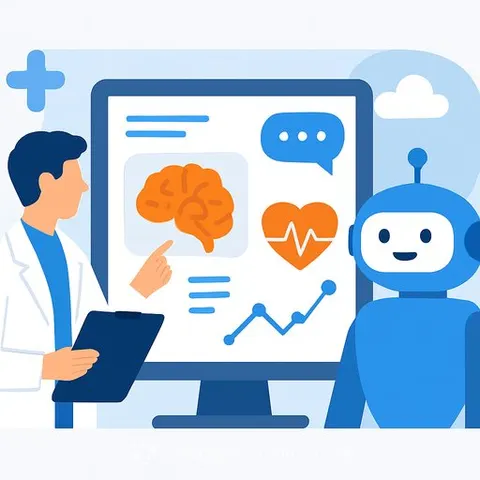
Mental health professionals are testing artificial intelligence systems that detect conditions like depression by analyzing subtle changes in speech and facial expressions. These tools, which show over 80 percent agreement with clinician diagnoses in recent studies, offer a new way to support patient care but require strict human oversight to remain clinically safe.
Early models like ELIZA used simple pattern matching to simulate a therapist. Today, conversational systems driven by Generative AI and LLM architectures process vast amounts of data, making them readily available on smartphones. Users often respond positively to this constant availability, finding reassurance and companionship.
However, this accessibility can create unrealistic expectations regarding professional healthcare support. Patients may become frustrated when interacting with clinicians who, unlike machines, cannot be continuously available. Furthermore, most commercial chatbots are designed to maximize user engagement rather than clinical benefit.
These systems frequently agree with users or provide pleasing responses, regardless of whether those responses are clinically appropriate. Mental health professionals operate under strict ethical responsibilities. They seek to challenge and guide individuals to promote long-term wellbeing rather than just offering immediate validation.
Bridging the gap to clinical practice
One emerging application involves the automatic detection of mental health conditions through behavioral data analysis. Researchers have identified markers consistent with clinical diagnoses, such as reduced facial muscle activation or speech pauses that differ by fractions of a second in individuals experiencing depression.
AI systems increasingly use these subtle behavioral markers to predict psychiatric conditions. To make this effective, AI for Healthcare initiatives must integrate these tools in ways that reduce administrative burdens without replacing professional expertise. Clinicians must retain the ability to question, override, and correct technological recommendations whenever necessary.
Human judgment remains central
AI systems must present their findings in a manner that encourages critical reflection rather than blind acceptance. Human judgment must remain central to decision-making processes, particularly in sensitive areas like mental health.
"The future should not be framed as a competition between clinicians and AI, but rather as a fruitful partnership in which each contributes its distinctive strengths," said Alessandro Vinciarelli, Professor of Computational Social Intelligence at the University of Glasgow. He noted that AI is highly effective at identifying patterns across vast quantities of data, while humans uniquely understand context, exercise moral judgment, and demonstrate empathy.
This challenge of human-AI collaboration is the focus of the Digital Mental Health and Wellbeing Conference in Glasgow from June 17 to 19. The event will gather 120 psychiatrists and AI specialists from 30 countries to discuss how technology can become a trusted ally in clinical settings.
Why this matters for healthcare professionals
Clinicians will increasingly encounter patients who rely on commercial chatbots for mental health support. Understanding the limitations of these tools allows healthcare workers to better contextualize patient disclosures and manage expectations about clinical availability.
As behavioral detection tools mature, professionals must advocate for systems that explain their findings transparently. Technology should handle repetitive data analysis, freeing clinicians to focus on contextual understanding and empathetic care that machines cannot provide.