
AI news ·
Researchers propose a framework for turning AI patterns into testable scientific hypotheses
A Nature Communications paper proposes a step-by-step framework for turning AI-discovered patterns into testable hypotheses, stressing that XAI leads must be verified through experiments or established science.
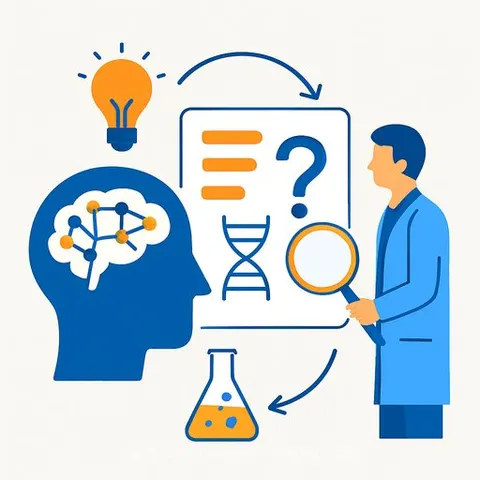
A team of researchers has proposed a step-by-step framework for turning patterns found by artificial intelligence into testable scientific hypotheses. The Perspective, published in Nature Communications on 6 August 2026, outlines how explainable AI (XAI) can guide discovery in fields ranging from turbulence research to healthcare, but only when its leads are verified through experiments or established science.
The work was led by Assistant Professor Gianmarco Mengaldo from the Department of Mechanical Engineering at the National University of Singapore's College of Design and Engineering, alongside Associate Professor Ricardo Vinuesa from the University of Michigan and Professor Steve Brunton from the University of Washington.
A prediction is not an explanation
Deep-learning models can make accurate predictions without revealing which information drove their answers. XAI refers to methods for tracing that information. In a model predicting aircraft drag, for example, XAI might pinpoint the specific airflow regions that most influenced the result or express a learned pattern as a simpler equation for scientists to examine.
"AI may tease out relationships that humans have overlooked, but an explanation of the model is only a lead," said Asst Prof Mengaldo. "It tells us where to investigate. Experiments, simulations and established science must then go on to find out whether the relationship exists in the physical world."
The model might rely on an airflow pattern because it reflects an important physical process, or because that pattern appeared frequently in the training data. XAI can reveal this reliance, but further testing must distinguish between the two.
From an AI clue to a tested insight
A recent turbulence study demonstrated the approach. Researchers used XAI to identify airflow patterns that most influenced an AI model's predictions. They then trained another system to modify those specific patterns, producing a drag-reduction strategy that outperformed one trained to minimise drag directly.
Instead of treating drag as a single outcome to minimise, the team found a more precise feature within the airflow to target. The explanation turned a prediction into a more effective control strategy, connecting the Perspective's three areas: discovery, optimisation, and certification.
Why explanations need testing before trust
An earlier study co-authored by Asst Prof Mengaldo in Nature Machine Intelligence showed why AI explanations require scrutiny. Several XAI tools were applied to the same AI model analysing an electrocardiogram. Despite examining the same prediction, the tools highlighted different parts of the signal.
The team developed numerical tests for establishing whether an explanation accurately reflects what influenced the model, rather than judging whether it merely looked plausible. The Perspective extends this principle to certification for high-stakes applications such as autonomous vehicles and AI-guided robots. If a system takes an unexpected action, investigators would need to reconstruct what information influenced that decision, which could inform safety improvements, regulatory responsibility, and legal liability.
Why this matters for science and research professionals
For researchers working with complex datasets, the framework offers a disciplined sequence: use XAI to identify what drove an AI prediction, turn that clue into a hypothesis, then test it through experiments, simulations, or established principles. The approach does not replace existing safety and regulatory assessments but adds evidence about which information influenced an AI's answers and why it might fail under unfamiliar conditions. Asst Prof Mengaldo's team is now applying the framework in healthcare, robotics, and climate science. "A meaningful milestone would be to identify a previously unknown mechanism behind an important scientific problem, then demonstrate through independent testing that it represents a genuine causal process in the real world instead of merely a statistical pattern in the data," he said. Professionals pursuing this intersection of AI and scientific method can explore the AI Learning Path for Research Scientists or follow developments in AI for Science & Research.