
AI news ·
Rice University secures $19.9 million NSF award to build AI materials laboratory
Rice University received a $19.9 million NSF grant to build a cloud-based AI and robotics lab. Researchers will simulate and run automated materials experiments on the platform.
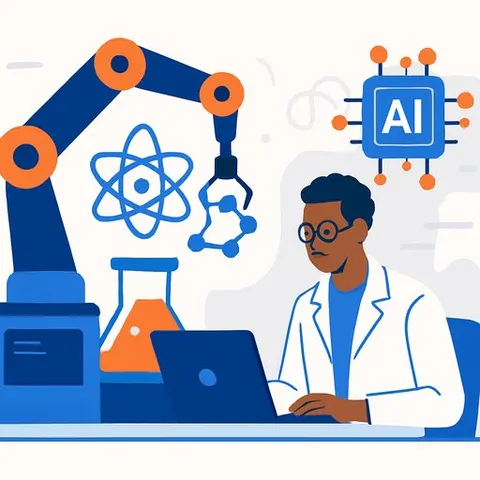
Rice University has received a $19.9 million National Science Foundation award to lead a four-year project that will use AI and robotics to automate experiments involving electronic and quantum materials. The project, called READINESS, will create a cloud-based research platform through which researchers can propose, simulate and conduct experiments remotely - potentially expanding access for institutions that lack the expensive equipment and specialist staff typically required for this work.
How the laboratory will combine AI, robotics and digital twins
READINESS will connect automated synthesis equipment, robotic systems and materials characterization tools with a digital twin, a virtual replica of the physical laboratory. Researchers will be able to test experiments in simulation before approved projects run on real hardware. An AI agent will analyze results from both successful and failed experiments, recommend further tests, and refine its suggestions over time. The system will operate within safety limits and consult human researchers when it encounters uncertainty. This approach reflects a broader trend in AI for Science & Research, where autonomous systems are increasingly used to accelerate discovery.
"Responsible AI should complement researchers' capabilities rather than replace their judgment," said Luay Nakhleh, dean of Rice's engineering school. "READINESS embodies this principle by combining automated systems with transparency, safeguards and human oversight at critical decision points."
Expanding access beyond well-equipped labs
The platform is designed to serve emerging research institutions, startups and small to midsize companies that may lack in-house synthesis capabilities. Through a cloud-based interface, users will submit experiments, test them in the digital twin, and conduct approved work remotely. Data gathered across every stage will link processing conditions to a material's structure and performance.
"Our goal is to create a laboratory that researchers from across the country can use to produce advanced electronic and quantum materials on demand," said Jun Lou, principal investigator and professor of materials science and nanoengineering. "By integrating robotics, AI and digital twins, we aim to learn from every experiment and shorten the pathway from scientific discovery to practical technology."
Training from K-12 to professional credentials
Alongside the research infrastructure, READINESS will support graduate and undergraduate research, teacher training, K-12 outreach and professional education. SUNY Polytechnic Institute will develop short courses and stackable credentials for workers in semiconductor manufacturing and laboratory automation. The University of Texas at Austin will contribute expertise in digital twins, autonomous experimentation and AI training. Professionals can also explore AI Research Courses to gain similar competencies in laboratory automation and AI-driven experimentation.
Why this matters for science and research professionals
The project signals a shift toward shared, remotely accessible research infrastructure that could lower the cost of entry for materials discovery. For scientists and engineers, familiarity with autonomous experimentation platforms and digital twins may become increasingly valuable as these tools spread beyond a handful of national labs and elite universities. The READINESS laboratory will not be open immediately - the award funds its development - but the model points toward a future where high-end synthesis and characterization are available on demand, much like cloud computing resources today.