
AI news ·
Richard Buxton says AI cannot replace human experience in fund management
AI reads 10 years of annual reports in seconds, but managers need in-person meetings to assess executive trust. Human judgment remains essential for evaluating leaders.
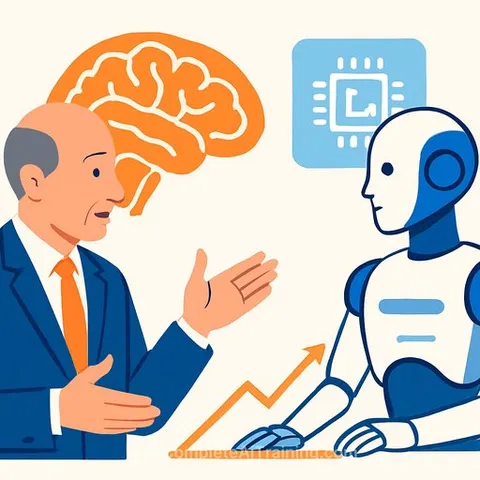
AI-powered systems can process earnings reports and market data at speeds no human can match, but they cannot replicate the judgment that comes from sitting across a table from a chief executive. For fund managers, the ability to assess a leadership team's honesty, ambition, and resilience remains a task that machines cannot perform.
Where AI earns its keep
Quantitative analysis and pattern recognition are areas where algorithms have a clear advantage. They can screen thousands of stocks against valuation metrics, flag anomalies in trading volumes, and update portfolio risk models in real time. These capabilities free up managers to focus on higher-value work.
Many firms already use machine learning to parse central bank minutes or earnings call transcripts for sentiment shifts. The technology handles the repetitive, data-heavy tasks that would otherwise consume days of analyst time. AI for Management is increasingly about automating the routine, not replacing the decision-maker.
The human edge no model can replicate
Meeting a management team in person reveals information that never appears in a spreadsheet. Body language, evasiveness, or overconfidence in a CEO's answers can signal risk that a language model simply cannot detect. A machine can read 10 years of annual reports in seconds, but it cannot look a CFO in the eye and decide whether to trust the numbers.
"New technology will have an edge in some areas, but can't replace the experience of meeting people," the analysis noted. That direct, personal assessment is the foundation of active fund management. It often makes the difference between buying a stock and passing on it.
Strategy and soft skills remain firmly human
Portfolio construction also demands contextual understanding that AI lacks. Deciding how much to allocate to a sector, when to exit a losing position, or how to navigate a market panic requires judgment built over decades. These choices are not purely data-driven; they involve temperament, conviction, and an understanding of investor psychology.
For senior leaders, the lesson extends beyond fund management. AI for Executives & Strategy can sharpen analytical inputs, but the final call - and the interpersonal skill needed to build trust - stays with the human professional.
Why this matters for management
Managers in any industry who rely solely on algorithms for hiring, performance reviews, or partner selection will miss the non-quantifiable signals that come from human interaction. The most effective leaders will use AI to handle the heavy lifting of data analysis, then apply their own judgment to the parts of the role that require empathy, intuition, and direct observation. The technology is a tool, not a substitute for the experience of meeting people.