
AI news ·
Robots take on repetitive construction tasks as US housing and labor shortages persist
The U.S. is short 1.2 million homes and nearly 300,000 construction workers, and robots are now delivering measurable gains in layout, drilling, and material handling. One Dusty Robotics operator can lay out 10,000 to 15,000 square feet a day.
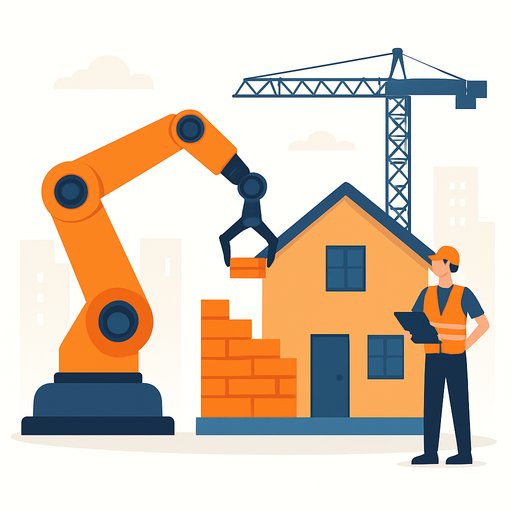
Robotics Targets Specific Construction Tasks
The U.S. housing market is short roughly 1.2 million homes and nearly 300,000 construction workers, a gap that adds about two months to average building timelines. Robotics is now producing measurable gains in repetitive, structured work such as layout, drilling, fastening and material handling, according to a CNBC report published Saturday.
The biggest benefits come from greater precision, fewer errors and higher productivity, not from replacing human builders. Construction sites remain difficult to automate because projects vary in design, materials, subcontractors and site conditions.
Standardization Before Labor Replacement
University of Michigan professor Vineet Kamat said the key question is whether robots can operate reliably across those conditions with a positive business case. Tessa Lau, founder of Dusty Robotics, told CNBC the deeper problem is not labor replacement but standardization.
Dusty's FieldPrinter puts digital building plans directly onto floors, helping multiple trades work from coordinated layouts. The company says one operator can lay out 10,000 to 15,000 square feet a day. That kind of throughput addresses a core bottleneck: when trades work from inconsistent measurements, rework follows.
The Factory Advantage
The biggest near-term gains may come from moving more construction into controlled factory environments. In Japan, some homebuilders use highly automated factory production for substantial portions of the construction process before final assembly on site.
The trend arrives as builders face a severe labor shortage that slows projects and raises costs. Industry estimates point to a need for more than 700,000 new construction workers annually to keep pace with demand. Deere & Co. executives similarly said construction labor remains constrained and customers are increasingly turning to technology to "do more with less."
For professionals tracking AI for Real Estate & Construction, the pattern is consistent: adoption starts where tasks are structured and repeatable. Kamat expects robotics to increase housing output over the next five to 10 years through targeted productivity gains, not wholesale worker replacement. The broader field of AI Agents & Automation follows the same trajectory across industries.
Why this matters for real estate and construction professionals
Robotics is not coming for jobs wholesale, but it is changing which skills command a premium. Workers who can operate layout robots, manage automated factory lines, or coordinate digital plans across trades will be positioned ahead of those who cannot. The productivity gains are real and measurable now, even if the technology remains years away from broader site automation.