
AI news ·
Rural patients wary of AI healthcare push despite federal funding
States are spending part of $50 billion in federal rural health funds on AI tools despite thin evidence they improve care. Rural residents in South Dakota remain skeptical, while a Stanford-Harvard review found the tools are "poorly evaluated" with few studies tracking patient outcomes.
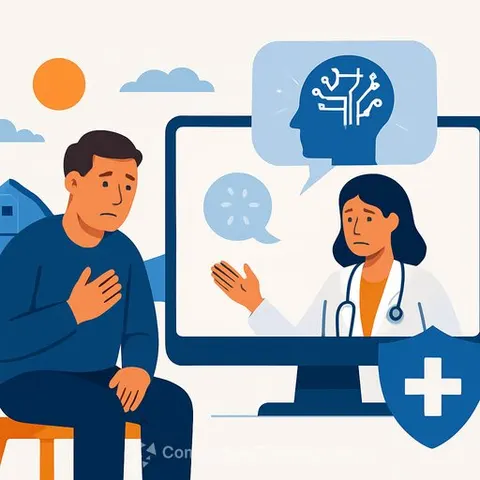
Federal officials are betting that artificial intelligence can help solve rural America's healthcare crisis, but the people who live there aren't convinced. Health secretary Robert F. Kennedy Jr. told senators that AI nurses can provide "concierge care" to rural patients, and Mehmet Oz, who leads the Centers for Medicare & Medicaid Services, has said AI-based avatars could connect rural patients to mental health services. States are now spending some of the $50 billion federal Rural Health Transformation Program on AI tools - despite thin evidence the technology improves access to care in rural areas.
Interviews with residents in Hot Springs, South Dakota, a city of about 3,400 at the southern end of the Black Hills, revealed deep skepticism about AI in healthcare. "I get artificial intelligence for certain things, but for personal healthcare - no," said Tara Haffner, standing outside the American Legion. She said she worries about AI making mistakes and wants healthcare to stay between her and her doctor.
Phil Mues, who oversees technology at Cherry County Hospital and Clinic in rural Valentine, Nebraska, sees it differently. AI scribes that record appointments and generate notes have helped reduce clinician burnout, he said, letting providers focus on patient care with "eye contact on the patient, not the computer."
"It won't replace people, but I think it will help in rural communities," Mues said.
States are spending on AI despite thin evidence
Congressional Republicans created the five-year Rural Health Transformation Program last summer as part of the One Big Beautiful Bill Act. The funding was meant to offset concerns about the law's impact on rural communities, which are expected to feel the effects of more than $900 billion in reduced Medicaid spending over a decade.
A KFF Health News review of state plans shows broad interest in using AI for back-office work like medical charting, coding, referrals, and prior authorization requests. Some states want to go further. Mississippi plans to use predictive AI to guide emergency medics with "triage, routing, and treatment decisions." North Dakota wants AI to "detect early signs of chronic disease and behavioral health conditions." Utah is interested in AI-powered fetal-monitoring devices, and Kentucky will explore AI chatbots that deliver "health coaching, gamified incentives, and rewards."
The rush concerns researchers. A recent report from ARISE, a Stanford- and Harvard-led group that evaluates health-related AI, found the tools are being adopted despite being "poorly evaluated." Few studies track patient outcomes. A separate academic paper found only 26 peer-reviewed studies about AI in rural healthcare published from 2010 through April 2025.
Qian Huang, an assistant professor at East Tennessee State University's Center for Rural Health and Research, said AI is usually tested at large academic hospitals and trained on data from urban patients. Rural patients may have different health issues and obstacles - like a lack of transportation - that the technology doesn't account for.
"In rural communities, trust and a personal relationship is essential," she said.
Rural facilities face real barriers
Many rural hospitals lack the hardware, IT staff, and internet speed needed to support AI, Huang said. Clinicians already juggling multiple roles may not have time for training. Patients may have slow home connections or no internet at all.
Some residents also simply don't want the technology. Stephanie Keller wears a smartwatch to track fitness but has no interest in an AI chatbot using her data to encourage health goals. "I don't have the time to chat with AI every day. I mean, are you kidding me? I don't want to spend my time on a cellphone," she said.
Roy Ehlers was more direct: "I'm old-fashioned. I don't believe in it. Technology is not my forte."
Even proponents acknowledge limits. Mues said rural hospitals at risk of closing probably can't use AI to save enough money to prevent those consequences.
Jordan Everson, an assistant professor at Georgetown University's Department of Family Medicine, warned that the pace of adoption creates risk. "The risk of signing contracts that rural healthcare organizations come to regret is pretty high," he said.
Will states track what works?
States are taking different approaches to measuring AI results. Connecticut will track how often AI-powered patient monitoring devices trigger accurate alerts. Texas will require organizations to track cost savings. Wisconsin lists "patient outcomes" and "productivity and efficiencies" as possible metrics.
But many state applications mention tracking only adoption metrics - how many clinicians and patients use the tools - not what happens after deployment. A CMS spokesperson said the agency doesn't have AI-specific reporting requirements but is working on a form for states to report overall progress and outcomes.
Huang said states need to share results so others can learn from their experiences. "We do not have a lot of resources to waste on tools that don't work in rural areas," she said.
Why this matters for healthcare professionals
For clinicians and administrators working in rural settings, the key takeaway is that AI adoption is happening now - but the evidence base is thin. Before committing to expensive tools, ask what outcomes the vendor can demonstrate in settings like yours, not just in urban academic hospitals. Track results locally, including clinician time saved, patient satisfaction, and health outcomes. And prepare for the infrastructure reality: AI tools require reliable internet, hardware, and staff training that many rural facilities still lack.
For those looking to build skills in this area, AI for Healthcare training can help clinicians evaluate and implement these tools responsibly. Understanding how AI Agents & Automation work is also becoming relevant as states fund tools that automate charting, coding, and prior authorization - tasks that currently consume significant staff time.