
AI news ·
Salesforce expands AWS and Google Cloud integrations to bring AI agents into enterprise workflows
Salesforce now embeds its AI agents and CRM data directly inside AWS and Google Cloud, eliminating platform switching for support teams. The integrations let agents pull live account history, resolve infrastructure issues, and complete purchases in one interface, with Hyperforce live on Google...
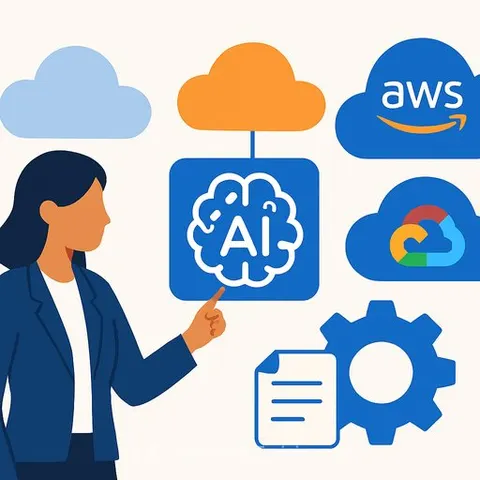
Salesforce is bringing its AI agents and CRM data directly into AWS and Google Cloud environments, the company announced at Dreamforce 2026 in San Francisco. The dual integrations target the fragmentation that slows customer service teams - letting agents pull live account history, resolve infrastructure issues, and complete purchases without switching platforms.
AI agents where support teams already work
Salesforce business context and actions will be available natively within Amazon Quick, AWS's business-focused agent, through the Model Context Protocol. That means Amazon Quick can access live CRM data from Salesforce and perform autonomous work for sales and customer service teams. In parallel, the AWS DevOps Agent is being integrated into Slack, letting teams resolve infrastructure problems without leaving the messaging tool.
"These new integrations with Salesforce give customers data access without migration, model choice at the right economics and AI agents where their people already work," said Rahul Pathak, AWS Vice President of Data and AI GTM.
Agentforce, Salesforce's agent platform, now has access to Amazon Bedrock's library of foundation models - including models from Anthropic, OpenAI, and Nvidia. Customer service leaders can choose which model powers their agents. The company is also adding Agent2Agent bidirectional audio support with Amazon Connect Customer over Websockets, enabling real-time voice interactions for support workflows.
Google Cloud and the headless CRM architecture
Salesforce is building what it calls a unified AI stack with Google Cloud. Hyperforce, the framework for running Salesforce software on public cloud platforms, is now live on Google Cloud with customer traffic. Broader migrations are expected in Q4.
"Hyperforce running natively on Google Cloud will extend the same security, compliance, and resilience standards we hold ourselves to," said Meir Amiel, Salesforce President and Chief Trust and Infrastructure Officer. "Enterprises will get Google Cloud's flexibility without giving up an inch of the trust bar they expect from Salesforce."
The integration with Google's Gemini Enterprise platform means CRM data surfaces directly inside Gemini without custom integration work. Salesforce's new headless architecture, also built on MCP, makes this possible. Gemini can now handle sales pipeline health checks, account summaries, and case triage across sales, service, finance, and advertising workflows. Tableau analytics are also brought into Gemini, grounding every response in Salesforce data.
Kevin Ichhpurani, president of the Global Partner Ecosystem at Google Cloud, said, "By bringing Salesforce into Gemini Enterprise, customers can now build trusted agents that reason across their business context and securely take action."
Salesforce also integrated Commerce Cloud with the Universal Commerce Protocol, so shoppers can discover and purchase products directly within Google Search or Gemini, with payments processed through Salesforce's secure infrastructure.
Why this matters for customer support teams
These integrations reduce the tool-switching that fragments a support agent's day. When a customer calls with a billing question, the agent doesn't need to leave the console to check CRM history or pull an account summary - the data surfaces in the same interface. Real-time voice support through Amazon Connect and case triage through Gemini mean fewer manual lookups and faster resolution. For teams building their own workflows, the AI for Customer Support tag tracks the specific tools and patterns emerging from these platform partnerships. Supervisors evaluating how to train teams on agent-powered workflows can review the AI Learning Path for Call Center Supervisors, which covers the shift from scripted chatbots to autonomous agents grounded in live business data.