
AI news ·
Sam Altman: AI Will Replace Many Support Jobs, Upend Coding Careers, Spare Nurses
AI will automate Tier-1 support-passwords, refunds, lookups-Altman says. Humans move to empathy, judgment, complex cases, and supervising AI quality and handoffs.
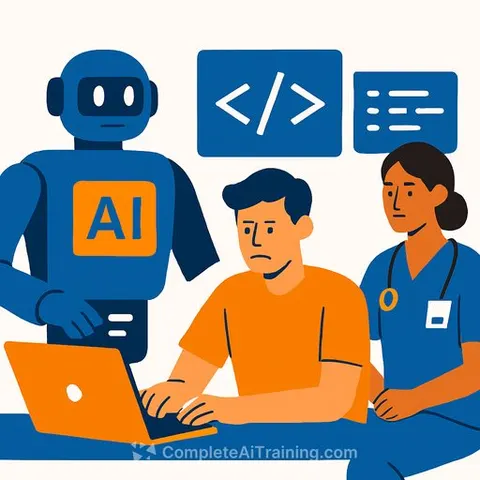
AI And Customer Support: What Sam Altman Just Signaled
OpenAI CEO Sam Altman recently said the quiet part out loud: "I'm confident that a lot of current customer support… will be better done by an AI." He also noted that no one can predict the future perfectly, but he's clear that first-line support is in the crosshairs.
He drew a contrast with roles that rely on deep human connection, using nursing as the example. Demis Hassabis from DeepMind echoed the same: empathy-led care is different. For support pros, the message is simple-routine tasks get automated; human trust, judgment, and complexity remain.
What This Means For Your Job
Tier-1 tickets and repetitive workflows will be automated. Human roles shift toward higher-value work, supervision, and complex cases.
- AI will handle password resets, order status, shipping ETA, refunds/returns, and policy lookups.
- AI will draft replies, summarize threads, translate messages, and classify intents.
- Humans will own de-escalation, exception approvals, multi-system troubleshooting, and account retention.
Where Humans Win
Altman and Hassabis both point to the same advantage: empathy and trust. That's your moat-especially in moments that actually change outcomes.
- High-emotion conversations, churn saves, and sensitive issues.
- Ambiguous problems with messy context or multiple tools involved.
- Policy judgment, edge cases, and risk calls.
- Relationship work with key customers and complex B2B accounts.
Shift From "Answering" To "Orchestrating"
The durable role is the AI-enabled support specialist. You design workflows, supervise AI, and ensure quality and compliance.
- Conversation design and guardrails: define tone, boundaries, and handoff triggers.
- Knowledge ops: keep articles structured, up-to-date, and optimized for AI retrieval.
- Human-in-the-loop QA: review AI responses, fix gaps, and train better prompts.
- Escalation strategy: decide what never gets automated and why.
30-60-90 Day Plan
- Days 0-30: Audit top 20 intents and macros. Baseline CSAT, FCR, AHT, deflection, and QA scores. Use an AI assistant to draft replies and summaries; keep a prompt library. Identify 5 policy risks and write clear guidance.
- Days 31-60: Pilot AI on one low-risk queue with human review. Set handoff rules (emotion detected, policy mentions, VIP flag). Compare pilot KPIs to baseline. Improve knowledge articles for clarity and structure.
- Days 61-90: Automate 25-35% of Tier-1. Formalize weekly QA of AI outputs. Publish an escalation playbook. Propose a new scope for your role: AI supervisor + complex case lead.
Tools To Test
Start with a general AI assistant for drafting and classification and your help desk's native AI features. Keep customer data safe: anonymize PII and follow company policy.
Explore ChatGPT for summaries, translations, tone adjustments, and intent tagging. Pair it with your ticketing system's automation (triggers, SLAs, macros) for fast wins.
Prompt Patterns That Work In Support
- Classification: "Classify this ticket into one intent from [list]. Output JSON with intent and confidence."
- Troubleshooting: "Generate a step-by-step checklist. Ask one question at a time. Stop and wait for user reply."
- Empathy-first reply: "Write a 3-sentence response: 1) acknowledge emotion, 2) state what you'll do, 3) set next step. Keep it under 80 words."
- Policy-safe response: "Answer only using this policy summary. If uncertain, ask for escalation."
Metrics That Matter With AI
- First Contact Resolution (FCR) and deflection rate (without hurting CSAT)
- CSAT and QA score for both AI-drafted and human-edited replies
- Average Handle Time (AHT) for complex vs. simple tickets
- Escalation accuracy (right cases escalated at the right moment)
Skills To Build This Year
- Prompt writing and conversation design
- Knowledge base structuring and maintenance
- De-escalation, empathy, and negotiation
- Policy, compliance, and risk awareness
- Data literacy: read dashboards, run small experiments, report impact
Programmers And Nurses: The Contrast
Altman said he's less certain about the future shape of programming jobs as AI makes software creation easier. Demand could keep roles strong-or automation could compress them over time.
For nurses, he expects minimal change because people want "the deep human connection." That's your cue: make empathy and judgment the center of your work, then use AI to clear the busywork.
Practical Next Steps
- Pick one queue and target 30% automation with human review.
- Standardize prompts and macros; log what works and what fails.
- Codify escalation criteria to protect customers and compliance.
- Report weekly impact to leadership with hard numbers and examples.
Keep Learning
If you want structured training for support workflows, see our curated options: Courses by Job and ChatGPT resources.
The Bottom Line
Altman's message is clear: AI will take a big bite out of routine support. Your advantage is the human side-empathy, judgment, and ownership of complex outcomes.
Become the person who designs, supervises, and improves the system. That's how you stay valuable while the work shifts.