
AI news ·
Splitit CEO says AI agents need full financial picture to recommend pay later
AI shopping agents need access to bank balances and existing debt to give sound pay-later advice, not just purchase history. Splitit found that showing prepayment flexibility lifted conversion rates roughly 2 to 2.5 times higher than listing only payment amount and APR.
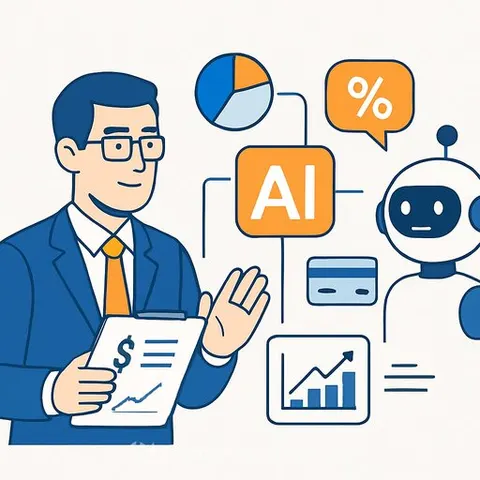
An AI shopping agent that recommends buy now, pay later financing needs far more than a consumer's purchase history to give sound advice. It requires visibility into bank balances, existing debt obligations, and the total cost of borrowing - data that most agents do not currently access. Splitit CEO Nandan Sheth told PYMNTS CEO Karen Webster that without this broader financial picture, automated payment recommendations risk steering consumers toward choices that look affordable month-to-month but carry hidden long-term costs.
The agent works for the consumer, not the merchant
Sheth's vision starts with a clear alignment of interests. "The agent is working for the consumer," he said. That principle shapes what information the agent uses and how it presents financing options. During his own search for a watch for his wife, Sheth's AI returned the requested product at several price points, then suggested an unfamiliar boutique brand based on what it knew about him and his family. He bought the alternative, which cost roughly 10% to 15% less.
Financing introduces a more complex set of calculations. Joint research from Splitit and PYMNTS Intelligence found that 61% of consumers would accept an AI recommendation for credit or pay later, while only 2% would let the agent decide on its own. Sheth expects recommendations to come first. "The starting point will be 'surface me the offer, I'll make the decision,'" he said. "The context that the AI provides allows the consumer to make a better decision."
What extra context does to conversion rates
Splitit tested how additional financing details affect consumer behavior. One version of an offer showed an $80 monthly payment, the APR, and total cost. The second version added that there was no prepayment penalty and explained that the consumer could make lower payments for three months, then pay off the remaining balance - incurring only a portion of the interest that would have accrued over the full six-month or 12-month term.
The version with that extra context delivered a conversion rate roughly two to 2.5 times higher than the version limited to payment amount, APR, and total cost. Webster noted that financial guidance does not necessarily end at checkout. A consumer might need the lower payment initially but have enough liquidity months later to repay the balance, creating what she described as "a dynamic relationship between agent and consumer" informed by the timing of money moving in and out.
The data problem and a localized solution
Building that relationship requires information far beyond shopping history. Sheth identified bank balances, credit card statements, revolving balances, and even brokerage statements as useful inputs. An agent would not need all of them - just some of that data, provided securely, could improve decisions involving pay later or a personal loan. Sheth acknowledged his own hesitation to share such information. "I have a fear of a breach, and I have a fear of that data being misused," he said.
Localization offers one safeguard. Sheth described a personalized large language model that performs much of its processing on the consumer's own device and reaches outside only for specific tasks. That architecture limits how much sensitive information needs to move beyond the consumer's environment.
When consumers will let agents take the wheel
Webster asked when consumers might feel comfortable letting agents act autonomously. Sheth said the answer depends on the purchase, the merchant, and the transaction size. He sees lower-value, routine transactions as the most likely candidates for automated purchasing. Groceries serve as a natural test case: a consumer could set a $300 monthly budget, provide information about typical purchases and discretionary items, and ask the agent to find the best deal. With a defined spending limit, Sheth said he could see the agent completing the payment.
An AI agent with sufficient context could recommend immediate payment for one purchase and pay later for another based on the economics of each transaction. That capability connects to the industry's longstanding focus on top-of-wallet status. A consumer may have a preferred card or payment method, but an agent evaluating each purchase has another set of information to weigh - financing cost, available liquidity, and other benefits attached to the transaction.
Why this matters for finance and operations professionals
For finance teams and operations leaders who manage payment workflows or customer financing programs, Sheth's framework points to a shift in how credit decisions get made. An AI agent that evaluates liquidity, existing obligations, and total borrowing cost before recommending pay later changes the underwriting equation. The conversion data Splitit shared - a 2x to 2.5x lift when prepayment flexibility is explained - suggests that transparent financing terms are not just consumer-friendly but commercially effective. Professionals designing checkout experiences or evaluating AI Agent Courses for their teams should watch how localized processing models evolve to handle sensitive financial data without exposing it to third-party breaches. The tension Sheth described between better recommendations and consumer privacy fears is unlikely to resolve quickly, but the direction of travel is clear: agents that understand the full financial picture will outperform those that see only the transaction in front of them.