
AI news ·
Schools integrate AI ethics into curricula to prepare students for future careers
Districts are integrating AI ethics into daily lessons to build critical thinking. The shift is urgent as the half-life of technical skills drops from 30 years to six years.
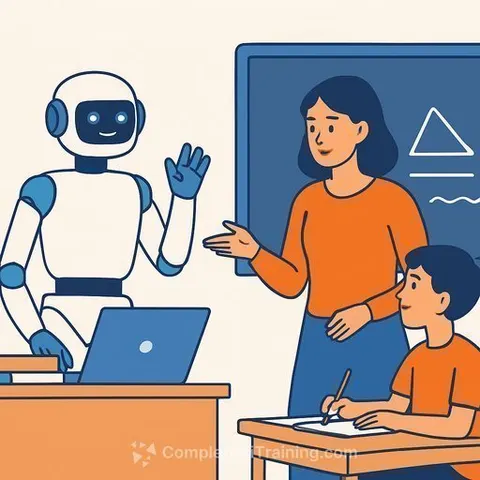
District leaders are shifting their focus from whether to allow AI in classrooms to how to embed ethics into every layer of AI instruction, a move that will determine whether students gain the durable skills needed for a job market where technical knowledge has a shrinking shelf life. With AI adoption accelerating in K-12 schools, the question is no longer about permission but about preparing students to interrogate, verify, and make judgment calls about AI outputs.
What AI ethics instruction looks like
AI curricula must teach fairness, transparency, bias awareness, and accountability-not as abstract concepts but as daily practices woven into how students create, critique, and revise work with AI. This approach works best when ethics-rooted AI education is integrated across grade levels and into existing subject areas, rather than treated as a standalone unit or technical elective. Building this kind of instruction often draws on resources from AI for Education programs that support teachers in integrating ethics across subjects. For example, instead of telling students that AI can be biased, teachers can have them find errors in model outputs, compare AI answers against primary sources, and test how different prompt phrasing changes results.
How to put it into practice
Ethics instruction should progress with hands-on, project-based methods that build critical thinking and reasoning. Administrators must align staff around consistent standards, and many are turning to structured professional development such as an AI Learning Path for Teachers to build that shared foundation. For elementary students, concrete, guided activities help them distinguish real from fabricated content and think critically about what they see. Middle schoolers can cross-check AI outputs against other sources and discuss where training data blind spots may exist. High school students should make and defend judgment calls about when to use AI on assignments, grapple with cases where an AI's answer is incomplete but not wrong, and apply AI to solve real-world problems they care about.
AI-era competencies go beyond technical skills
Technical skills alone won't be enough. Students need three deeper competencies: learning to learn, adaptability, and agency. Learning to learn means building mental frameworks and habits to continuously explore new tools. Adaptability requires adjusting approaches and revising assumptions as AI changes tasks. Agency empowers students to question AI outputs, reject shallow automated reasoning, and decide when to use AI versus not. These competencies connect technical knowledge with human skills that AI can't replicate. With the half-life of skills dropping from 30 years to six years, according to the Harvard University Mignone Center for Career Success, the ability to continuously learn and adapt is vital for resilience against disruption.
Why this matters for education professionals
District leaders who delay integrating ethics into AI instruction risk widening the gap between students who can use AI critically and those who merely use it. A well-rounded, ethical AI education builds not just technical skills but the confidence and sense of purpose that safeguard students' futures. For education professionals, the immediate step is to embed ethics into everyday classroom practice across grade levels, ensuring that every teacher has the training and resources to guide students in interrogating AI rather than accepting its outputs at face value.