
AI news ·
Senate witnesses call for AI guardrails and federal funding for teacher training
A Senate subcommittee urged schools to adopt AI guardrails and improve teacher training. Currently, 58% of educators have received AI instruction.
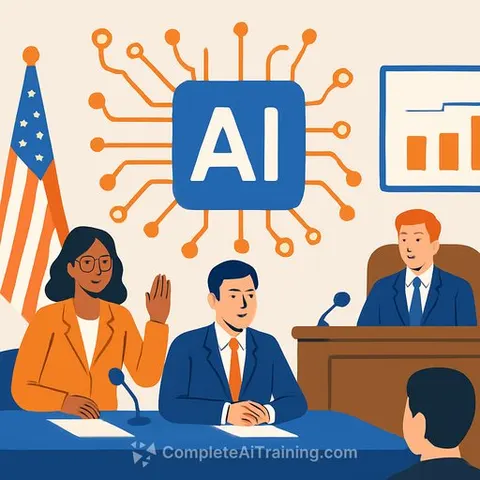
State and district leaders must push for guardrails on AI use in schools and prioritize teacher training as the technology evolves, witnesses told a U.S. Senate subcommittee Tuesday. The hearing before the Subcommittee on Education & the American Family examined how policymakers can help schools integrate AI without sacrificing human judgment or academic integrity.
"AI can expand opportunity while preserving what matters most about education-human relationships and human judgment," said Cynthia Marten, Delaware's secretary of education. She stressed that this balance is possible when schools keep students at the center, establish strong guardrails, and judge AI by outcomes rather than hype.
Optimism collides with anxiety
The hearing comes as schools grapple with competing visions of AI's role. An executive order from President Donald Trump a year ago aims to integrate artificial intelligence across K-12 education, signaling federal ambition. At the same time, many educators worry AI will weaken students' ability to think independently and fuel a rise in cheating through increasingly sophisticated writing and academic support platforms.
No federal policy currently sets guardrails for AI use in schools, though several states and districts have acted on their own. At least seven states have enacted an AI policy, according to an Education Week tracker, and last year 21 state lawmakers proposed more than 50 bills on AI in education, per a Center for Democracy and Technology report.
Delaware's approach: testing vendor claims
One state-level effort highlighted at the hearing was Delaware's AI Assurance Lab. The program evaluates AI tools with direct input from teachers, who test products in their classrooms to determine whether they are safe and actually improve student learning. Marten described AI as "a shiny new toy; you have to test the vendor claims." Letting teachers verify those claims with real students and curricula, she said, provides the most honest feedback.
Programs like the AI Assurance Lab are part of a broader movement to bring AI for Education under thoughtful oversight. By involving educators in the review process, districts can avoid adopting tools that overpromise and underdeliver.
Teacher training lags behind AI's pace
Witnesses agreed that teacher training is the most urgent need. Erin Mote, CEO of InnovateEDU, told the subcommittee that more than half of schools have provided no training on the safe use of AI. "Our schools urgently need federal leadership, structured support, and dedicated funding," she said.
There are signs of improvement. As of March, 58% of teachers reported receiving at least one professional development session on AI, nearly double the percentage from early 2024, according to an EdWeek Research Center survey. But the technology's fast pace makes curriculum design a moving target. Joshua Jones, CEO of QuantHub, warned that the speed of change is unlike anything education has faced before and will only accelerate.
Marten reinforced the point bluntly: "The tool is no good if the person using the tool does not know how to use it." For schools to establish meaningful guardrails and expand AI use, Congress must support AI Learning Path for Teachers initiatives, witnesses argued.
Why this matters for educators
The hearing made clear that classroom teachers will bear the weight of AI adoption. Without consistent training and clear policies, educators are left to manage powerful tools that can both aid and undermine learning. District and state leaders who invest in teacher-led evaluation and ongoing professional development will be better positioned to use AI's benefits while protecting student thinking and academic honesty.