
AI news ·
Singaporeans increasingly use AI to manage finances but still prefer human guidance
35% of Singaporeans use AI for personal finance, and 19% rely on it for major decisions. Yet 81% still demand human oversight for complex, long-term planning.
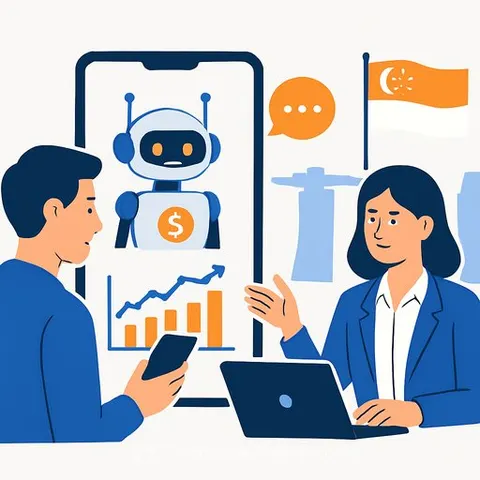
Nearly nine in 10 Singaporeans use digital channels to manage or seek information about personal finances, and more than a third now turn to AI tools for financial purposes, according to an MDRT survey released July 27, 2026. Among AI users, 19% have made financial decisions based primarily on AI-generated advice, signaling a shift that finance professionals cannot ignore-even as the data shows strong demand for human oversight.
How Singaporeans use AI for financial decisions
Of the 35% of Singaporeans who use AI tools for financial purposes, the influence goes well beyond casual information gathering. Six in 10 say AI advice has shaped their savings or budgeting habits, 47% used it when choosing or switching financial products such as loans, credit cards or insurance, and 40% say it informed major decisions including large investments or property purchases. Nineteen percent rely primarily on AI to guide those choices.
"AI is only as effective as the information it receives. It may not identify gaps in our thinking or ask follow-up questions that uncover important aspects of our financial situation," said Laura Hoi, a 22-year MDRT member with six Court of the Table qualifications. "The risk is that decisions made based on incomplete information or narrowly framed questions may overlook critical considerations."
Digital platforms and generational divides
Established platforms still lead. Banking websites and mobile apps are used by 52% of respondents, government financial portals by 43%, and comparison websites by 30%. Yet 29% now turn to OpenAI's ChatGPT and Google's Gemini, while 14% use AI-powered chatbots from banks or financial institutions. Top tasks include understanding concepts such as mortgages, investing and taxes (54%) and comparing financial products (51%). Convenience (57%), cost accessibility (52%), and the ability to simplify complex information (40%) are the main draws.
Generational patterns are sharp. Millennials and Gen Z are more likely to use AI for active management-budgeting, planning-while Gen X and baby boomers treat it primarily as a source of information.
Trust gaps persist, face-to-face interaction valued
Despite heavy adoption, most Singaporeans (81%) use AI as a knowledge-building tool, not a replacement for professional advice. Among those who have not acted on AI-generated advice, 45% cite lack of human oversight or reassurance, 36% fear bias or errors, and 36% worry about generic or automated responses. Only 37% are comfortable using AI for personalized financial advice, and just 31% would use it to review long-term financial plans. Even clients who work with a financial advisor show the same pattern.
In-person meetings remain critical. Around four in 10 prefer face-to-face discussions for complex financial topics (42%), important decisions (41%), and long-term plan reviews (38%). That jumps to half (50%) during periods of market volatility or financial uncertainty.
"AI can provide answers based on a snapshot of information, but financial planning goes beyond that. It's about knowing the questions to ask, understanding each individual's unique circumstances, and helping clients adapt their financial plans as their lives and goals evolve," Ms Hoi said.
Why this matters for finance professionals
Clients are already experimenting with AI-often before they walk into a meeting. Advisors who can acknowledge AI's speed and convenience while delivering the empathy, judgment and long-term perspective that machines cannot replicate will differentiate themselves. Understanding where AI tools fail and where they supplement decision-making is becoming a core skill. Advisors looking to build that competency can explore resources such as the AI Learning Path for Finance Managers and follow developments in AI for Finance to stay current with tool capabilities and client expectations. The survey makes clear: the winning model pairs tech efficiency with human trust.