
AI news ·
Sint Maarten delays national AI in education policy until 2027
Sint Maarten's national AI in Education Policy will not reach a mature-draft stage until Q2 2027, the Ministry of Education confirmed during Parliament's 2026 budget review. The delay leaves schools without official guidance on generative AI, cheating, and data privacy for over two years.
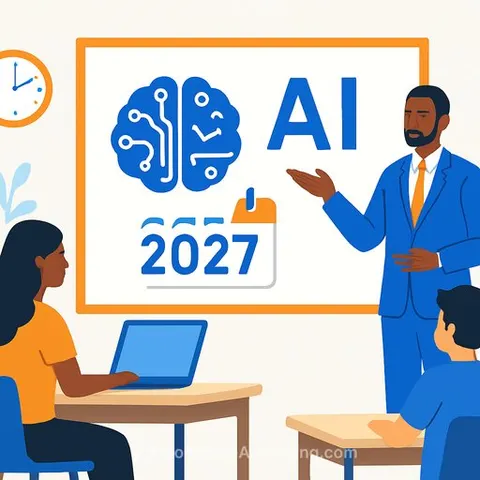
PHILIPSBURG - The Sint Maarten government has named artificial intelligence a top education priority, yet its national AI in Education Policy will not reach mature-draft stage until the second quarter of 2027. The Ministry of Education, Culture, Youth and Sport (ECYS) disclosed the delay during Parliament's scrutiny of the draft 2026 National Budget.
The policy is meant to establish the national framework for responsible and ethical AI integration across all levels of education. According to ECYS, it will identify priorities for digital literacy, teacher capacity, digital resources, and effective use of technology in teaching and learning. It will also address student use of generative AI, definitions of cheating, teacher preparation, data privacy, and how to ensure students without adequate devices or internet access are not disadvantaged.
Why the policy is delayed
ECYS attributes delays across its education initiatives to stakeholder consultations, procurement, legislative development, technical requirements, and shortages of financial and human resources. For the AI policy specifically, the Division of Education said the project needed additional time to collect supporting data, with further research and stakeholder consultation still required.
The broader government objective is to develop future-ready competencies, including digital literacy, critical thinking, problem-solving, and entrepreneurship. The policy is also being developed alongside related reforms, including a review and modernization of the Foundation Based Education (FBE) curriculum, financed through the Temporary Work Organisation (TWO). That multi-year programme extends through 2026 and 2027 and includes teacher professional development.
Infrastructure and wider ICT setbacks
The Division of Public Education has no dedicated operational budget for major ICT investments. According to ECYS, classroom technology and internet connectivity are financed through the Capital Service or other approved cost centres, while smaller purchases may come from General Goods and Services.
The AI policy is part of a wider group of delayed technology reforms, including the Fleet Tracking System and the Ministry Management Information System (MMIS), both of which faced technical implementation difficulties. The government confirmed no cost overruns have been identified, with allocations carried forward according to revised schedules.
Sint Maarten's approach to AI in education is being watched closely by regional policymakers, and the framework's development offers lessons for AI Policy Makers in small island states balancing ambition with limited resources.
Why this matters for education professionals
The central tension is timing. Students and teachers already have access to powerful AI tools that can generate essays, answer questions, and produce images, but schools must operate without official guidance until the policy lands. For educators, the practical question is what interim direction schools are receiving, how teachers are being trained now, and how student privacy and academic integrity will be protected before 2027.