
AI news ·
SK Group chairman Chey Tae-won urges AI transformation and proposes one person, one agent infrastructure
SK Group Chairman Chey Tae-won ordered a "one person, one agent" AI push to protect memory market opportunities. He will deploy digital avatars to bridge corporate hierarchies.
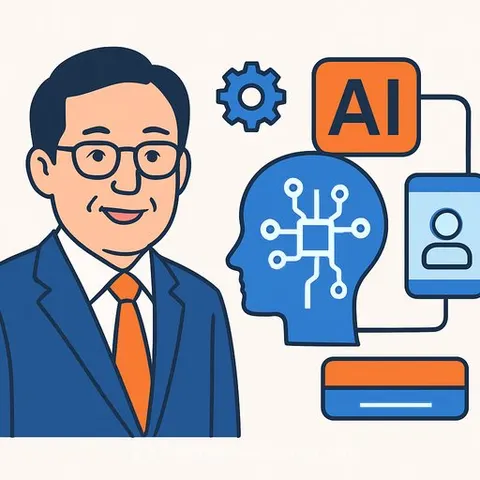
SK Group Chairman Chey Tae-won directed company leaders and employees on June 13 to accelerate AI transformation (AX) by building a one person, one agent infrastructure. Speaking at the 2026 New Icheon Forum, Chey warned that delaying this shift could cost the memory industry a critical market opportunity.
Building a one person, one agent infrastructure
The forum, held at the SKMS Research Institute in Gyeonggi Province, combined management strategy sessions with employee feedback for the first time. Chey urged the company to redefine individual tasks as the starting point for AX. He explained that an AI agent is a generative system capable of understanding user goals to handle information retrieval, summarization, document creation, and scheduling. This approach to AI Agents & Automation requires shifting focus from personal tools to systems that connect directly to organizational outcomes.
"Now is the time to enter the AI transformation (AX) at full speed, in all 360 degrees," Chey said. "If we do not act now, the golden opportunity the memory industry has encountered will not come easily again." To model this behavior, he announced plans to create multiple digital avatars of himself. These agents will listen to specific group company concerns and facilitate direct communication across the corporate hierarchy.
Aligning AX with operational improvement
Chey defined the core purpose of AX as operational improvement. He said AX serves as the primary mechanism to strengthen execution capabilities across the conglomerate. He pointed to the broader global market, noting that memory technology drove the initial AI wave. Future computing demand will force major shifts in energy, data centers, and communication networks.
SK Group plans to capitalize on this trajectory. Chey noted that few companies hold full-stack capabilities spanning AI-era memory, data center infrastructure, and the energy required to support them. He argued that the company's current portfolio contains the necessary elements to lead the industry.
Why this matters for management
Executives must move beyond viewing AI as a personal productivity tool and treat it as an organizational operating system. The push for AI for Executives & Strategy requires leaders to actively redefine workflows and deploy agents that bridge the gap between individual tasks and company-wide metrics. Managers who fail to integrate these systems risk falling behind as industry peers automate core operational improvements.