
AI news ·
Smarter hiring blends AI insights with human judgment
AI speeds sourcing, screening, and scheduling. Humans add context, audit for bias, and make the call.
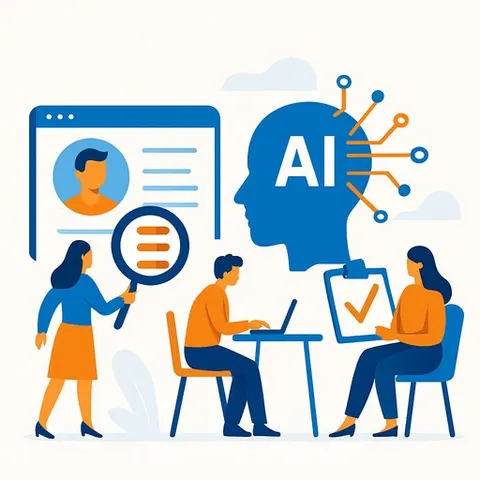
Successful hiring strategies combine human judgment with AI insights
AI is now embedded in hiring. It parses resumes, scores assessments, and moves candidates through pipelines faster than any coordinator. The upside is clear: speed, consistency, and lower costs.
But speed without context creates risk. A widely reported case showed how a recruiting engine learned to downrank resumes that included the word "women." That's the caution: algorithms learn from the past, and the past contains bias. The fix is a hybrid model-AI for scale, people for signal.
Where AI adds real value
- Sourcing: surface prospects who match skills, location, and availability.
- Screening: score resumes against must-have requirements to reduce manual review.
- Assessments: generate role-based tests and monitor activity to flag copy-paste or suspicious behavior.
- Scheduling and communication: automate reminders, confirmations, and status updates.
- JD optimization: test job description variations to improve qualified applications.
Where AI stumbles-and humans should lead
- Career gaps and pivots: caregiving, military service, layoffs, and sabbaticals need context only a conversation reveals.
- Nuance: sarcasm, humor, and subtle shifts in tone can confuse automated interview tools.
- Speech and accents: some systems misinterpret less common accents, hurting otherwise strong candidates.
- Values and team fit: alignment with principles, collaboration style, and leadership potential needs live interaction.
Build a practical hybrid hiring flow
- Intake: define success criteria, deal-breakers, and structured interview questions with hiring managers.
- Sourcing: use AI to map the market and build a diverse slate; recruiters validate edge cases.
- Screen: apply AI for basic qualification; humans review flags and non-traditional profiles.
- Assess: run skills tests with monitoring; create a human override path for false positives.
- Interview: combine one-way or chatbot screens for volume with live conversations for top candidates.
- Culture add: include a short presentation or values discussion to assess how candidates work and make decisions.
- Decision: calibrate as a panel; document why each decision was made.
Guardrails to keep hiring fair and compliant
- Document criteria before you post the role. Avoid moving goalposts mid-process.
- Audit for adverse impact by stage, including any AI-enabled step. Keep records of changes you make.
- Be transparent: tell candidates when AI is used and provide a human review option.
- Collect consent and follow data retention limits. Restrict access to recordings and assessment data.
- Offer reasonable alternatives for candidates who need accommodation.
- Vet vendors: request bias testing results, training data sources, and model update cadence.
- Give recruiters final say. No automated tool should make the hiring decision.
- Review guidance from regulators on AI in selection processes here.
Candidate experience still decides the outcome
More than half of candidates will reject an offer if their experience was negative at any point. A bot-only funnel feels cold and risks losing top talent.
- Set expectations up front: stages, timelines, and who they will meet.
- Use automation for speed, then add human touch points at key moments.
- Give timely feedback, even if brief. Close loops fast.
- Keep one-way video tools short and optional; provide a live alternative.
Metrics that matter
- Time-to-slate and time-to-hire by role.
- Pass-through rates by stage and demographic group; watch for drop-offs.
- Quality of hire: first-year performance and retention.
- Candidate satisfaction (NPS) and hiring manager satisfaction.
- False positive/negative rates on AI screens; adjust thresholds accordingly.
- Cost per hire versus outcome quality.
Upskill your HR team
AI literacy is now a core HR skill. Teach teams how models score, where bias shows up, and how to run audits and overrides with confidence.
If you need structured paths to build those skills, explore role-based options here.
Bottom line
Use AI to do what it does best: speed, structure, and scale. Use people to do what they do best: judgment, empathy, and context.
The winning hiring strategy blends both-clear criteria, audited tools, and real conversations that respect the person behind the resume.