
AI news ·
Solitics turns iGaming moments into loyalty with agentic AI and smart gamification
Solitics blends agentic AI, real-time triggers, and gamified flows to boost retention for iGaming. Less manual busywork, faster tests, and timely prompts that hit when it counts.
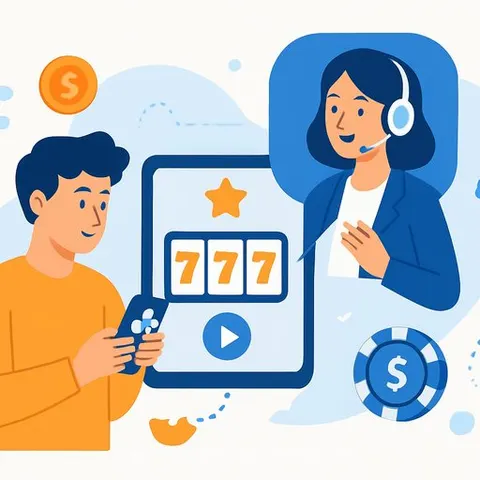
Solitics: AI-driven customer engagement to out-think the competition
AI isn't a strategy by itself. Without the right data, near-zero latency, and clear customer outcomes, it's just noise. Solitics stands out because it blends those pieces into a system that ships quickly and learns fast.
Built for iGaming operators, Solitics combines agentic AI, real-time segmentation, and gamified experiences to drive retention and lifetime value. For product teams, the interesting part is how these capabilities translate into lower time-to-experiment, fewer coordination bottlenecks, and measurable impact.
From strategy to execution: agentic AI that builds campaigns and flows
Solitics' AI Expert lets marketers turn a short prompt into live campaigns and multi-step user flows. It's not just predicting outcomes from past behavior; it generates on-brand assets and logic that can run immediately.
Because it's tuned for iGaming, operators don't have to retrofit generic tools to fit risk, compliance, and bonus logic. The result: less swivel-chair work between product, CRM, and data teams, and faster iteration on what actually drives retention.
- Product takeaway: Treat AI like a co-creator. Define input schemas (intent, audience, guardrails), required outputs (segments, triggers, content), and review checkpoints before launch.
- Governance: Bake in brand, compliance, and promotion constraints as policies the AI must respect. Log prompts, outputs, and approvals.
- Measurement: Attach every AI-built flow to core metrics: activation, retention, ARPU, and LTV. Kill or scale based on lift, not opinions.
Smart Gamification: Missions and Widgets that keep users active
Retention improves when progress is visible and rewards feel earned. Solitics' Missions layer creates task-based challenges (e.g., daily login streaks or "play 10 rounds of blackjack") that keep users moving.
Paired with Widgets-interactive UI elements that prompt action-operators see higher engagement because there's always a next step. This aligns well with behavior design models like the BJ Fogg Behavior Model, where motivation, ability, and prompts must meet at the same moment.
- Product takeaway: Ship small, compounding loops: clear task → visible progress → meaningful reward → next task.
- Design notes: Keep tasks simple, time-bound, and transparent. Show streaks, near-miss states, and upcoming rewards.
- Ops: Create a library of reusable Missions and Widgets with parameters (game type, stake, time window) so teams can launch in minutes.
In-Game Pulse: real-time moments that convert
Sportsbooks win on timing. Solitics' In-Game Pulse reacts to live events-like a goal-with instant, relevant prompts (e.g., next goalscorer markets). The offer lands when attention is highest, not after.
Under the hood, this demands an event stream, low-latency decisioning, and guardrails to avoid message spam. If you can't move in milliseconds, you're invisible.
- Product takeaway: Standardize event schemas (goal, card, timeout), map them to trigger rules, and set frequency caps by user and match.
- Experimentation: Always A/B prompts, odds formats, and incentive types by sport and segment.
Predictive AI that acts before churn
Solitics' Predictive AI maintains a per-user churn and loyalty score, refreshed from live behavior across systems. These scores feed directly into segments, triggers, and content-no analyst in the loop.
This is where product velocity shows up: fewer manual pulls, less coordination debt, and more time running targeted saves and win-backs.
- Product takeaway: Treat scores like features. Version them, monitor drift, and track lift by cohort and campaign type.
- Operationalize: Define clear actions for risk bands (high, medium, low). Prebuild offers and content for each band.
- Quality: Monitor precision/recall for churn predictions and the actual ROI of interventions, not just open rates.
The competitive edge: speed, relevance, and user experience
The gap between keeping and losing a user often comes down to seconds and context. Solitics' mix of agentic AI, real-time triggers, and gamified flows is built to close that gap.
For product leaders, the play is simple: reduce latency to create moments that matter, automate the boring parts, and keep experiments flowing. Here's a quick checklist.
- Event backbone: consistent taxonomy across casino, sportsbook, payments, and CRM.
- Latency goals: sub-second decisions for live sports; minutes for lifecycle changes.
- AI guardrails: brand, compliance, and promo limits as enforceable rules.
- Content ops: reusable templates for prompts, offers, and Missions.
- Rate limits: per-user, per-match, and global caps to prevent fatigue.
- Fallbacks: if live data fails, degrade gracefully to safe defaults.
- Experimentation: always-on A/B testing with automatic allocation.
- Observability: dashboards for engagement, conversion, LTV, and model health.
- Workflow: clear handoffs between product, CRM, design, and compliance.
Where to go next
If your team is systematizing AI skills across product, CRM, and data, this curated catalog can speed things up: AI courses by job.
Gamification relies on sound behavior design. A quick primer worth bookmarking: BJ Fogg Behavior Model.
Solitics shows what happens when AI is paired with clean data, on-brand constraints, and fast execution. Less debate, more lift-delivered where it counts: in real time.