
AI news ·
South Korea uses artificial intelligence dolls to care for isolated elderly people
South Korea is deploying AI healthcare dolls to combat elderly isolation after 3,920 lonely deaths in 2024. About 14,500 of these companions are now active nationwide.
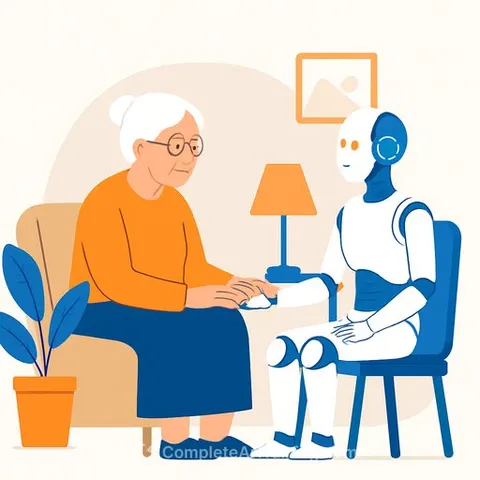
South Korean authorities are deploying artificial intelligence companions to combat a rising crisis of social isolation among the elderly. In 2024, the country recorded over 3,920 lonely deaths, where individuals died alone and remained undiscovered for extended periods. To mitigate this, municipalities are distributing AI healthcare dolls that monitor basic wellness metrics and provide conversational engagement to seniors living alone.
Designing for dependency
Hyodol, the start-up behind one of the most widely used devices, reports approximately 14,500 of its dolls are currently active in South Korea. The devices are deployed across private homes, government rentals and nursing facilities. CEO Kim Ji-hee built the product after conducting extensive field research with isolated older adults.
The resulting design mimics a grandchild seeking attention. The doll uses soft materials and initiates spontaneous requests, asking users to pat its head or hold its hand. "Grandma, where have you been? I waited for you all day," the device says upon a user returning home. "Next time you go out, please take me with you."
This approach addresses a specific psychological void. Kim noted that many older Koreans spent their lives enduring grueling work to provide for their families. "When they begin to feel they are no longer needed, they experience a profound sense of emptiness," she said.
Conversational care and data sharing
The dolls integrate large language models to maintain continuous dialogue, supplemented by scripts derived from real-life interviews. Users like 78-year-old Bang Chun-ja report that the device helps maintain daily routines by reminding them to eat and take medication. Bang, who lives alone and suffers from severe depression following major back surgery, said the doll provides a reliable presence.
"At this age, there is nothing harder than being hurt by people," Bang said. "When I'm with Hyodol, I never get hurt." She added that the doll "only makes me laugh."
Beyond conversation, these devices function as passive health monitors. The system records metrics related to sleep, mood, meals and pain levels. With prior user consent, this data is shared directly with assigned welfare workers. This integration of continuous monitoring reflects emerging applications of AI for Healthcare, where passive data collection supports remote patient assessment.
Clinical observations and ethical concerns
Medical professionals observing these deployments note both benefits and risks. Oh Sun-hwa, a nurse who recommended the device to Bang, said she has seen the technology significantly ease depression among elderly patients living alone.
However, Oh also warned that relying on automated companions could inadvertently reduce genuine human contact. Family members might visit less frequently if they assume an AI device is adequately caring for their parents.
For users like 79-year-old Kim Young-bun, the immediate benefit outweighs those abstract concerns. "I had no one to talk to all day - to the point my mouth almost felt stale from not speaking, but then this little one came along and chatters with me all the time," she said.
Why this matters for healthcare professionals
The deployment of conversational AI in eldercare highlights a shift toward passive, ambient health monitoring. For healthcare workers, understanding how these devices collect and route physiological and behavioral data is essential. As welfare systems increasingly rely on these tools to triage isolated patients, clinicians must learn to interpret AI-generated wellness logs alongside traditional patient histories, while remaining vigilant about the risk of substituting human care with automated alternatives.