
AI news ·
St. Bernards Healthcare doctors use AI to build patient charts during exams
St. Bernards Healthcare in Jonesboro, Arkansas, now uses AI to transcribe patient visits, with only two patients opting out since rollout. Doctors say the tool cuts paperwork and frees up time for patient care.
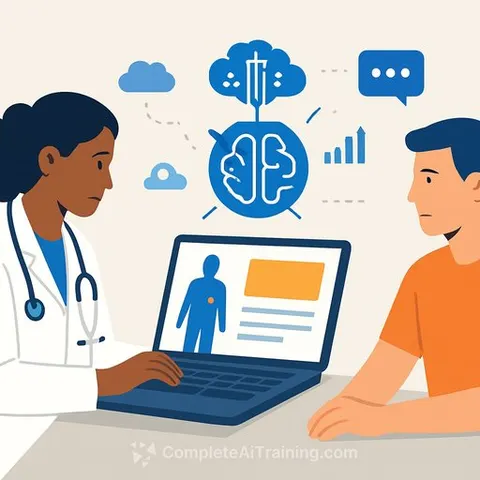
Doctors at St. Bernards Healthcare in Jonesboro, Arkansas, are using AI to build patient charts during exams, a shift that is cutting paperwork and giving physicians more time with patients. Dr. Mark Wiggins, a physician at the health system, has used the tool for about a year and said the response from patients has been overwhelmingly positive.
The AI programs listen to the conversation between a patient and doctor, then sort out the medically relevant facts and structure them into a chart. Wiggins said the software filters out the noise.
"AI programs that we use listen to the conversation that takes place between a patient and a doctor," Wiggins said. "And it sorts out the medically relevant facts of the case. And it leaves out the social commentaries about soccer games on the weekend."
The program is being used hospital-wide. Only two patients have opted out since the rollout began.
How the AI is tested and controlled
Chris Zumbach, director of ambulatory applications at St. Bernards, said the AI went through careful testing before reaching exam rooms. Physicians still make the diagnosis themselves - the AI only organizes what patients report about their symptoms.
"We do testing with these projects," Zumbach said. "There's pilot phases. We roll it out slowly and purposefully. We get feedback from our physicians. But at the end of the day, it simply summarizes the document. The physician reviews it. The physician has control of the document and the care of the patient."
The health system treats the AI like any other piece of medical technology. Zumbach said the IT team evaluates vendors, reviews specifications, and checks that the tool meets privacy and security policies before it can be used with patient information.
Patient privacy and consent
Patients are told when the AI is recording a visit. The recording can happen on a phone, tablet, or desktop microphone, depending on the provider's setup, but Zumbach said no one should be caught off guard.
"We certainly wouldn't want anyone to be caught off guard with that conversation," Zumbach said. "What it looks like in day-to-day practice across the entire industry, some people use cell phones, some people use tablets, some people use wired connections to a desktop. It really, anywhere there's a microphone, you can use these types of tools."
Using the AI is optional. Patients who do not want it used during their visit can tell their provider, who will turn it off.
Why this matters for healthcare professionals
For doctors and clinicians, this case shows a practical template for bringing AI into exam rooms: run pilot phases, let physicians review every AI-generated note, and make consent explicit. The St. Bernards rollout also signals that patients generally accept ambient listening when it improves face time with their doctor - a factor worth weighing if your organization is considering similar tools.