
AI news ·
State Farm attorney sanctioned for citing AI-generated fake cases in court filings
A Los Angeles judge fined a State Farm attorney $999.99 for filing motions with AI-generated fake cases and fabricated quotes. The sanction highlights the legal danger when lawyers fail to verify AI outputs before submitting them to court.
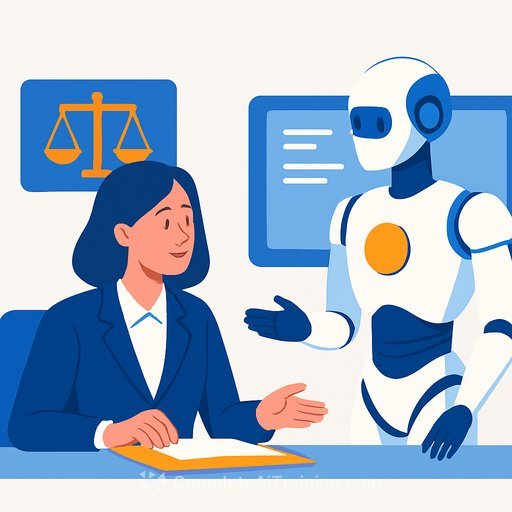
A Los Angeles judge ordered a State Farm attorney to pay a $999.99 sanction for filing court motions that cited nonexistent cases and fabricated quotes produced by artificial intelligence software. The penalty, imposed on September 14, 2026, underscores the growing legal and professional risks insurance firms face when their representatives rely on generative AI without verifying outputs.
The attorney submitted multiple motions containing AI-generated hallucinations-fictitious legal citations and invented quotations that appeared credible but had no basis in actual case law. The unusual fine amount, one cent shy of $1,000, drew attention to a problem courts are increasingly confronting as AI tools become common in legal drafting.
The mechanics of the violation
The sanctioned filings included references to cases that simply do not exist. AI language models generate text by predicting statistically plausible word sequences, not by retrieving facts. When asked for legal citations, these systems can produce names, dates, and holdings that sound authentic but are entirely fabricated. The State Farm attorney apparently did not verify the AI-generated content before submitting it to the court.
Judges across multiple jurisdictions have sanctioned lawyers for similar conduct since 2023. The core issue is not the use of AI itself but the failure to check its output against primary sources. Courts treat this as a violation of the duty of candor and competence that attorneys owe to the tribunal.
What this signals for the insurance industry
Insurance legal departments and claims operations increasingly use AI for document review, drafting, and research. The State Farm case demonstrates that institutional reputation and individual careers are on the line when verification protocols are absent or ignored. A sanction, even a modest one, becomes part of the public record and can affect client trust and regulatory standing.
The $999.99 figure-while small-serves as a deliberate marker. It signals that courts will penalize AI misuse without imposing fines large enough to trigger additional procedural requirements, keeping the focus on the principle rather than the dollar amount.
Why this matters for insurance professionals
Claims adjusters, underwriters, and in-house counsel who use AI tools for report generation or document drafting face the same fundamental risk: the output is only as reliable as the verification process behind it. A fabricated precedent in an internal memo might not reach a courtroom, but it can still distort coverage decisions, settlement valuations, or regulatory filings. The takeaway is specific and operational-any workflow that incorporates generative AI must include a mandatory human review step for factual assertions, citations, and quoted material before the work product reaches its final audience.