
AI news ·
Steyer proposes per-token AI tax to fund California sovereign wealth fund and education
California gubernatorial candidate Tom Steyer wants to tax corporate AI use by the unit of data processed, funneling revenue into education and job training. The plan has no legislation behind it yet, and key details remain unresolved.
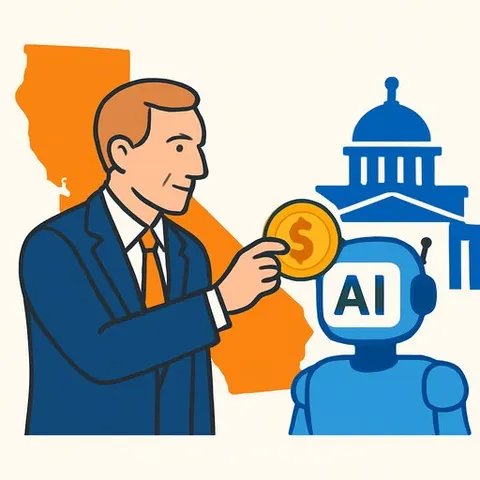
California Candidate Proposes AI Tax to Fund Education and Job Training
Tom Steyer, a billionaire running for California governor, proposed a token-based tax on corporate AI use at a San Diego town hall on March 31, 2026. The tax would seed a Golden State Sovereign Wealth Fund designed to finance education, job training, and cash dividends to residents.
Steyer described the levy as a fraction of a cent per unit of data processed by companies using generative AI systems. He acknowledged that the specifics would require negotiation with businesses and state lawmakers.
What This Means for Education Professionals
The proposal directly targets education funding. A sovereign wealth fund backed by AI taxation could expand resources for schools, teacher training programs, and workforce development initiatives-areas that have faced budget pressures across California.
For educators and training administrators, the proposal suggests a potential shift in how education budgets are funded. Rather than relying solely on traditional tax revenue, the model would tie education financing to the economic value generated by corporate AI deployment.
Policy Status and Uncertainties
The proposal remains at the campaign stage with no legislative framework yet drafted. Key details remain unresolved: how the tax would be calculated across different AI applications, which companies would be subject to it, and how revenue would be distributed between education, training, and dividends.
Similar ideas have been suggested before. The state-level scope and lack of detailed mechanics limit immediate implementation prospects, though the proposal reflects growing interest in taxing AI-generated corporate value.
Learn more about AI for Education and Generative AI and LLM technologies that would fall under such a tax framework.