
AI news ·
Students increasingly access artificial intelligence through classroom platforms
Most teachers now use AI in classrooms yet receive no formal training, according to a May 2026 poll. New York City will ban generative AI in schools through 8th grade starting September 2026.
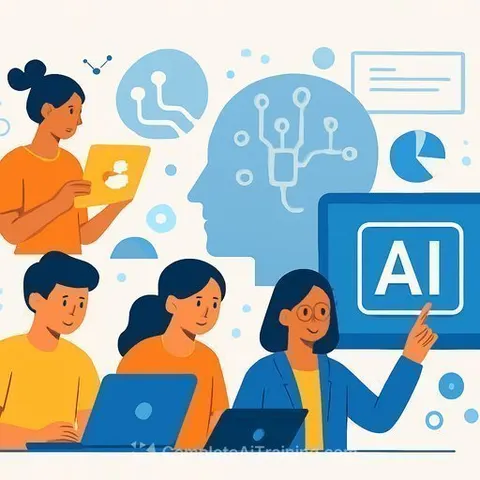
Artificial intelligence is now embedded in many K-12 classrooms, with platforms that students already use for assignments and teacher communication gaining AI features accessible to younger learners this school year. The shift means educators face immediate decisions about how-or whether-to integrate these tools into daily instruction, often without clear district-level policies to guide them.
Most teachers already use AI in some capacity. A May 2026 poll found that a majority of educators have adopted the technology, yet they frequently receive no formal training or administrative guidance on its use. The gap between classroom reality and institutional support has left teachers to navigate AI's presence largely on their own.
The cheating concern and administrative responses
Student misuse remains a top worry. A February 2026 survey showed that most teenagers believe their peers are using AI to cheat in school. The concern spans grade levels and subject areas, with some institutions taking aggressive steps to counter the trend. New York City moved to ban generative AI entirely until high school, a policy set to take effect in September 2026.
Some teachers are redesigning assessments in response. Rather than relying solely on detection software, they are creating assignments that require students to demonstrate their learning process in ways AI cannot easily replicate. MIT issued its own warning in August 2026, reporting that AI can now credibly complete most undergraduate assignments.
Higher education is grappling with the same problem. An Ivy League professor who suspected widespread AI cheating in his courses chose to redesign his approach to assessment rather than simply penalize students. The shift toward process-oriented evaluation is gaining traction across both K-12 and university settings.
The training gap for educators
Despite the rapid adoption of AI tools in schools, structured professional development lags behind. The May 2026 poll underscored that teachers are using the technology without the benefit of consistent training programs or clear pedagogical frameworks. This disconnect creates uneven experiences for students, depending on individual teacher comfort levels and personal experimentation with AI.
For educators looking to build foundational knowledge, resources such as AI for Teachers Courses offer structured pathways to understand both the capabilities and limitations of classroom AI tools. The broader topic of AI for Education covers emerging practices, policy developments, and practical strategies for integrating the technology responsibly.
Why this matters for educators
The presence of AI in classrooms is no longer hypothetical. Students are accessing these tools through the same platforms they use every day, and the question for teachers is not whether AI will appear in their classrooms but how they will respond when it does. Without clear district guidance, the responsibility for setting boundaries, designing AI-resistant assessments, and teaching students to use the tools ethically falls squarely on individual educators. Building personal competency with AI-understanding what it can and cannot do-is now a practical necessity for anyone managing a classroom.