
AI news ·
Study finds adults 60 and older most loyal to AI customer service
Consumers 60 and older are the most loyal to AI customer service that works, with nearly 90% saying they'd keep using it-6.4 points above younger groups. But only 16.6% expect automation to succeed initially, showing reliability, not age, drives trust.
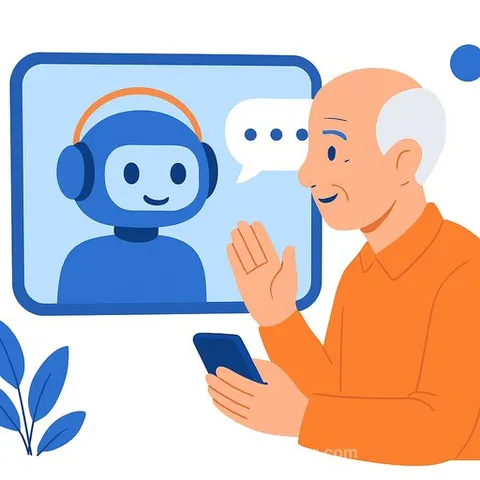
Consumers aged 60 and older are the most likely age group to stick with AI-powered customer service when it works, according to Parloa's 2026 Consumer Patience Index. Nearly 90% of respondents in that age group said they would continue using an automated system that reliably solved their issues - the highest of any age band and 6.4 points above the average across all younger groups.
Parloa, which helps companies build and train AI agents for customer experience, published the findings on August 13, 2026. The data contradicts the assumption that older consumers, who are not typically viewed as digital natives, are the hardest to win over with automation.
Age and trust in automation
The pattern reverses when consumers are asked whether they expect automation to work in the first place. Among consumers aged 18 to 29, 46.5% said they are confident or extremely confident that automated systems could resolve their requests accurately. Only 16.6% of those 60 and older said the same.
"The demographics tell an interesting story, but the real signal is that consumers aren't opposed to automation itself, including AI," said Latané Conant, chief marketing officer at Parloa, in a press release. "The group often assumed to be hardest to win over turns out to be the most loyal to automation if the technology consistently delivers. When the experience improves, loyalty to agentic CX and to the brand providing the journey follows, regardless of age."
The findings suggest that skepticism toward AI in customer service is tied to negative experiences, not to age. For customer support professionals, the practical implication is that older consumers are more likely to return to AI agents when the system resolves their issue reliably - they just need proof it is worth trying first.
Reliability is the baseline
Conant said the data points to experience, not demographics, as the deciding factor for whether consumers keep using automated support. "Demographics aside, the fact is that nobody is against automation if it works," she said. "The distrust is earned one broken chatbot at a time. Fix the experience, and loyalty to CX automation and to the brand follows, at any age."
The results are relevant to customer support teams designing automated systems. Training AI agents to handle common requests accurately may be the more effective way to retain older customers, rather than pushing them to human agents for every conversation. Artificial intelligence tools for customer support are available - the challenge is configuring them for consistent resolution. Teams that want to build these skills can find guidance in AI for customer support resources or training options like AI for User Support Specialists.
Why this matters for customer support professionals
Many support teams still route customers over 60 to human agents first, assuming they will bounce from automation. This data suggests the opposite: older customers will keep using AI support when it actually solves their problems. The priority for support professionals should be measuring first-contact resolution for AI agents by age group - if the older segment is showing high resolution rates, take them off an automatic escalation path. If a group isn't converting, the fix is the AI agent's accuracy and conversational design, not avoidance of automation.