
AI news ·
Tata Steel deploys AI surveillance and remote operations to cut workplace hazards
Tata Steel deployed over 10,000 AI-enabled CCTV cameras to detect unsafe acts and trigger instant alerts. The company cut its lost time injury frequency rate by 38% over 15 years.
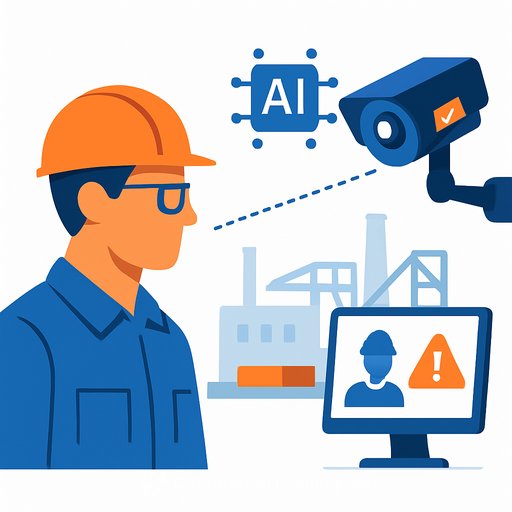
Tata Steel expands AI surveillance and remote operations for workplace safety
Tata Steel is scaling up artificial intelligence, connected workforce systems and remote operations to make industrial safety more predictive, with more than 10,000 CCTV cameras and AI-enabled surveillance deployed across its operations to identify unsafe behaviour and enable timely intervention. The push comes as the steelmaker works to reduce workers' exposure to high-risk environments across mines, plants and logistics networks.
Over the past 15 years, Tata Steel has reduced its group-wide lost time injury frequency rate (LTIFR) by 38 per cent. The company is now using AI-enabled surveillance to detect unsafe acts and generate immediate alerts for supervisors, reducing dependence on manual monitoring of thousands of camera feeds.
Connected workforce platform tracks personnel movement
Tata Steel is deploying its Connected Workforce platform across India, using AI-enabled gate passes and beacons installed inside plants to track personnel movement and flag deviations. The system is designed to help ensure workers enter only authorised and safe areas while enabling closer monitoring of movement across industrial facilities.
The company is also expanding Integrated Remote Operation Centres (iRoCs), enabling hazardous operations in mines and plants to be monitored and, where feasible, controlled remotely. The centres bring together CCTV feeds, plant and machinery data and other critical information on large screens, helping reduce workers' exposure to hazardous environments and improve coordination during emergencies.
Remote operations could also help attract younger workers to the steel industry by reducing exposure to hot, humid and high-noise workplaces. For operations teams, the shift toward AI for Plant Managers means rethinking how teams supervise work that no longer requires physical presence at the equipment.
AI extends to logistics and fleet safety
Tata Steel is deploying digital safety systems across logistics operations. Around 8,000-10,000 trucks and trailers carrying raw materials or goods enter its plants every day. Driver-fatigue monitoring systems use cameras to detect head movement and mobile-phone use, triggering alerts and automated warnings. Technology is also being used to prevent trucks from coming into contact with overhead cables.
The company's digital safety systems include real-time hazard detection, Internet of Things (IoT) monitoring, predictive asset-health analysis, drones, smart surveillance and generative AI-enabled safety observation systems. Tata Steel expects AI-powered hazard prediction, computer vision, digital twins, autonomous inspections, wearables and connected-worker technologies to become central to industrial safety by 2035.
Safety engineers working with these systems increasingly need to understand how computer vision models flag unsafe acts and how to calibrate alert thresholds for different environments. AI for Safety Engineers covers the practical side of deploying and tuning these detection systems.
Safety governance and workforce coverage
Tata Steel's safety performance is reviewed through its board-level Safety, Health & Environment Committee, Risk Management Committee and other leadership forums, with safety risks integrated into enterprise risk management. The company's Zero Harm philosophy applies equally to contract workers, who undergo mandatory induction, competency assessments, role-specific training, audits and performance monitoring.
Tata Steel has invested in two safety leadership development centres and benchmarks its practices against global steelmakers and other industries. Its safety agenda also extends to mental health, heat stress, fatigue and ergonomics through a five-pillar wellness framework covering physical, emotional, occupational, social and financial wellbeing.
The company spent Rs 802.17 crore on environment, safety and compliance projects in FY2025-26, compared with Rs 1,036.25 crore in FY2024-25. Tata Steel reported a 19 per cent year-on-year rise in consolidated net profit to Rs 2,385.24 crore in the June quarter, while total income rose to Rs 61,026.97 crore in Q1 FY27 from Rs 53,466.79 crore in the corresponding quarter a year earlier.
Why this matters for operations teams
For operations professionals, Tata Steel's rollout signals where industrial safety technology is heading: fewer manual camera checks, more automated alerts, and remote control of hazardous processes. Teams should expect to manage exceptions generated by AI systems rather than monitor feeds directly. That means building skills in interpreting system alerts, tuning detection thresholds, and integrating AI-generated safety data into daily shift handovers and incident reviews. The 38 per cent LTIFR reduction over 15 years shows the baseline; the next phase depends on how well operations staff can act on what these systems flag.