
AI news ·
The Working Assembly explains its use of AI illustration for the Untold voice journaling app
TWA used AI illustration for Untold not to cut costs but to build a visual system that responds to users' emotions in real time. The team encoded human-created style rules into a custom AI, making taste and direction the product rather than replacing illustrators.
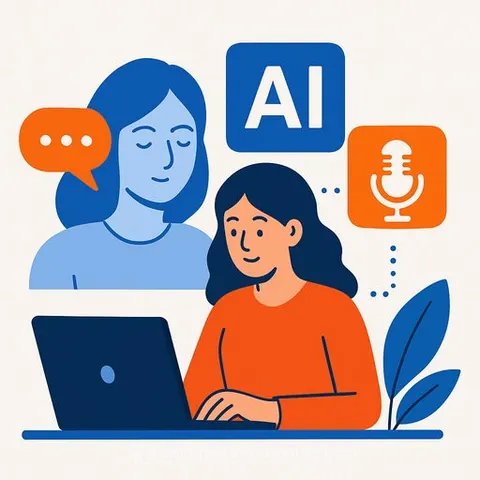
When The Working Assembly (TWA) revealed its branding for the voice-journaling app Untold, the use of AI illustration drew immediate questions. One reader put it plainly: why not commission a human illustrator? The answer, from TWA founder Jolene Delisle, reveals a design choice driven by functionality rather than cost-cutting - and points toward a future where designers set rules for systems that generate dynamic visual content.
A visual system built to respond, not replace
"For us, it wasn't really AI versus an illustrator or about replacing an illustrator," Delisle said. "It came from what we were trying to build for Untold. The illustrations in the system are meant to respond to what people are expressing - their emotions, thoughts, and experiences - and evolve as the product is used." The team wanted a visual language that could keep responding to each user. A fixed library of illustrations could not do that.
The process started with a human-created visual reference. TWA then built a custom AI agent around a specific set of creative rules and guardrails. "It wasn't just asking an image generator to make paintings," Delisle said. "We were designing a visual language and then building a way for that language to continually evolve." She compared the approach to traditional brand guidelines - a system of rules that lets a brand produce new work without the original designer creating every asset. Here, those rules were encoded to respond dynamically to what people shared with Untold.
The tension between human expression and machine interpretation
Delisle acknowledged the discomfort some creatives feel about a machine visually interpreting something as personal as a voice. "I get the tension in something so human, like someone's voice being visually interpreted by a machine," she said. "I don't think we shied away from that tension there. To me, it's actually one of the more interesting things about the project."
She stressed that the studio regularly commissions illustrators, photographers, and artists. The decision was specific to the experience Untold required. "The distinction is that we didn't use AI simply to replicate something we would otherwise have commissioned someone to make," Delisle said. "It enabled us to create an experience that could be dynamic and meaningfully different every time you open the app."
Human craft at the core of the AI system
The system was not built by feeding generic prompts into an image generator. A team member created the initial illustration, which became the reference for the AI. From there, the team spent significant time customizing and refining outputs. "Things like the texture, tone, lighting, composition, and all the little details that made it the specific illustration style we were going after," Delisle said. The work required the same eye, thinking, and taste that any design project demands.
This approach - building bespoke AI tools from human-created references - is likely to spread. Delisle sees the designer's role shifting "from physically making every individual thing to creating the right inputs, setting parameters, curating, editing, and knowing when something is right or wrong. You still need the eye, the thinking, the craft, and the taste. The tool doesn't make those decisions for you." For those exploring how AI intersects with creative work, AI for Creatives offers further context on these shifting workflows, while the technical side of building such systems connects to broader practices in Generative Art.
Why this matters for creatives
This project signals a concrete shift in what "using AI" can mean in branding. It is not a simple swap of illustrator for algorithm. It is the design of a system - with human taste, rules, and refinement at the center - that generates responsive, evolving visual content. For working designers and illustrators, the takeaway is specific: the market is starting to value the skill of directing AI systems, not just operating them. Knowing how to encode a visual language into parameters, curate machine outputs, and maintain a consistent aesthetic across infinite variations will become a distinct and billable capability. The tool does not make taste obsolete. It makes taste the product.