
AI news ·
ThinkingAI launches agentic engine that automates marketing loops from analysis to action
ThinkingAI launched its Agentic Engine on September 16, 2026, letting teams of specialized AI agents detect, diagnose, and run A/B tests on marketing problems entirely within a customer's own infrastructure.
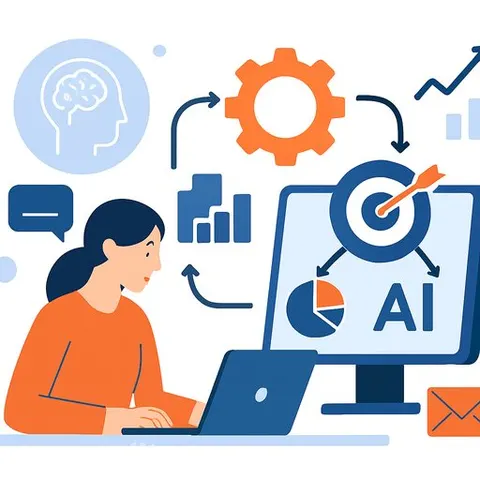
The third era of 21st-century marketing has arrived, and it hands the campaign reins to autonomous AI agents. ThinkingAI, formerly known as ThinkingData, launched its new Agentic Engine on September 16, 2026. The platform represents a fundamental shift: instead of AI simply analyzing data and presenting dashboards for humans to interpret, teams of specialized agents can now detect problems, diagnose causes, devise responses, run A/B tests, and measure results-all within a customer's own infrastructure.
For marketing professionals, this changes the job from manually connecting the dots between data and action to overseeing a system that completes the loop itself. The company's evolution from a data analytics tool to an agentic platform signals where enterprise marketing technology is headed next.
From dashboards to autonomous action
Chris Han, one of ThinkingAI's founding engineers, described the shift during a recent conversation. The original ThinkingData platform, launched in 2015, helped companies collect behavioral data and use insights to drive product iteration and customer engagement. But humans still had to notice something interesting, investigate it, decide what to do, set up a campaign, and evaluate results. The tools got faster, but the baton still passed from person to person.
The Agentic Engine changes that handoff. "Take an initial analysis all the way to a change in the product," is how Han's team frames the goal. Specialized agents focus on different tasks-data tracking, analysis, engagement, experimentation-and can work together as teams. Han said it is technically possible for agents to create sub-agents to tackle particular problems.
How the loop works in practice
Consider a hypothetical online gaming company. An analytical agent detects an unusual number of new players abandoning the game at Level 7. It investigates and finds that players who acquire a specific weapon in Level 6 get crushed by the first monster in the next level. The system identifies the affected cohort and prepares an A/B test: some players receive a more powerful weapon, a hint, or another incentive. An engagement agent delivers the message while the system monitors retention, spending, and other metrics. Results feed back in, and the agents refine their approach.
ThinkingAI calls these incremental improvements "atomic opportunities." The process-observe, analyze, diagnose, decide, act, measure, repeat-applies far beyond gaming. An e-commerce company might discover shoppers abandon carts after seeing shipping charges. A streaming service could find that subscribers who finish a certain series cancel soon after. A fitness app might detect that users who miss several workouts are about to churn. The underlying challenges remain the same, even as the details differ.
Data stays on your servers
Giving autonomous agents access to customer data and live campaigns raises obvious concerns. Han addressed two of them directly. First, the Agentic Engine can run inside a customer's own infrastructure-on-premises, in a virtual private cloud, or another self-hosted environment. "The collection, storage, computation, visualization, and analysis can all take place on the customer's own servers," Han said. "We don't touch any kind of data. The client's data always belongs to the clients."
Second, the platform incorporates human-in-the-loop controls, role-based permissions, and audit trails. Agents can analyze, diagnose, and prepare campaigns, but important actions still require human approval before anything reaches customers. The system is designed to accelerate the work, not remove marketers from consequential decisions.
Why this matters for marketing professionals
The Agentic Engine does not eliminate the marketer's role-it changes where humans spend their time. Instead of pulling reports, building segments, and manually launching campaigns, marketing teams become operators and strategists who set guardrails, approve high-stakes actions, and focus on creative direction that agents cannot supply. The loop from insight to action shrinks from weeks to hours, but the human judgment at key decision points remains. For marketers building skills in AI Agents & Automation, understanding how to manage autonomous systems rather than just use analytics dashboards will separate those who thrive in this third era from those still stuck in the second.