
AI news ·
Trump's irrationality may be the blueprint for resisting replacement by AI
Trump opposes AI regulation despite industry requests, voter support, and international agreement. No AI can replicate the irrational, logic-defying decisions that come naturally to an addled mind.
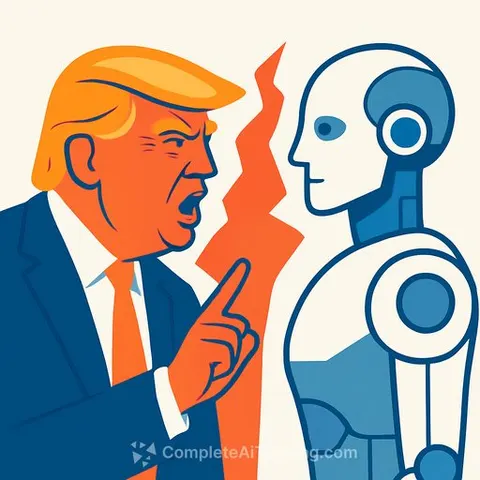
Donald Trump's opposition to AI regulation may have accidentally revealed a defense against being replaced by artificial intelligence: become too irrational for any machine to predict. While tech CEOs warn of existential risks and even ask for their own companies to be regulated, Trump has ignored the overwhelming public support for oversight, the global consensus on AI dangers, and the very industry leaders who build these systems.
The lesson for writers facing replacement by large language models is unexpected. An AI trained on past work can produce a passable imitation of what someone has written before. But it cannot predict how deeply a person will descend into madness under the pressure of current events. No machine can replicate the specific derangement that comes from watching norms collapse in real time.
How AI makes decisions - and where it fails
AI systems operate by examining past patterns and selecting paths most likely to succeed without repeating prior mistakes. They use logic, reasoning, and consistent replication. This is precisely what makes them incapable of mimicking truly unhinged behavior. No learning machine can manufacture the kind of illogical missteps that come naturally to an addled mind with no concern for outcomes.
Trump's decision to oppose regulation despite industry requests, voter support, and international agreement demonstrates a logic-defying pattern no AI would generate. The same principle applies to writing. A columnist with years of archived work could theoretically be cloned by training a model on those columns. But the human response to living through political chaos - pulling out hair, vomiting into hats, teetering on the edge of sanity - remains beyond algorithmic reach.
The limits of AI-generated writing
Large language models can produce readable text when fed enough examples. They can mimic style and structure. What they cannot do is generate genuine reactions to an unfolding reality that itself defies prediction. An AI will not lose its composure because a president's son had his wedding financed by a foreign oligarch while the public shrugs. It will not spiral into fury when cultural institutions get shuttered over petty grievances. These responses require a human breaking point that machines simply lack.
For writers concerned about being replaced, AI for Writers offers practical training on working alongside these tools rather than being displaced by them. Understanding what AI cannot do becomes as important as understanding what it can.
Why this matters for writers
Writers who want to remain irreplaceable should lean into what makes their work genuinely human. An AI can approximate your past output. It cannot anticipate the specific, unpredictable ways your perspective will warp and deepen under sustained pressure. The goal is not to resist AI by becoming more efficient - it is to become more authentically, messily, unreproducably yourself. That is the one thing no training data can capture.