
AI news ·
TSX rallies to near 36,000 after rebounding from July lows
The S&P/TSX Composite surged over 200 points Wednesday, nearing 36,000 as broad gains erased July's rate-hike losses.
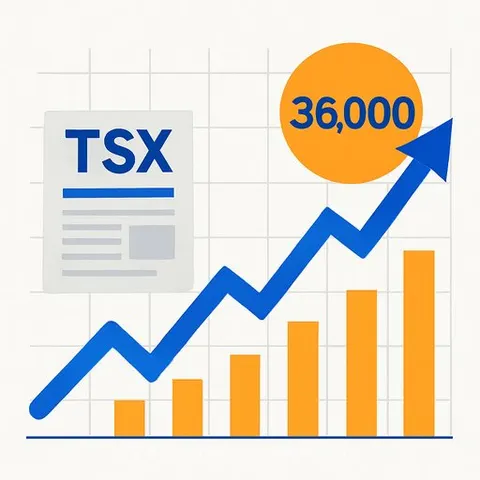
Canada's main stock index surged Wednesday, climbing near the 36,000 threshold as broad-based gains swept the market. The S&P/TSX Composite Index added over 200 points, recovering sharply from the July lows that followed the U.S. Federal Reserve's latest rate hike. The rally reflected renewed investor confidence that central bank tightening cycles may be nearing their end.
What drove the rebound
Financials and energy stocks led the advance. The heavyweight banking sector rose as bond yields stabilized, easing pressure on loan margins and capital ratios. Energy producers tracked higher crude prices, with Canadian Natural Resources and Suncor both posting solid gains. Technology and industrial names also contributed, signaling that the buying was not confined to a single pocket of the market.
The move erased much of the damage from the previous month, when the TSX had dipped to its lowest levels since early spring. Traders pointed to shifting expectations around interest rates. Markets are now pricing in a longer pause from the Fed, and the Bank of Canada's own messaging has turned more cautious after its July decision to hold rates steady.
The Fed factor and Canadian resilience
The U.S. central bank raised its benchmark rate in late July, but Chair Jerome Powell's comments left room for interpretation. Some investors read his remarks as signaling a data-dependent approach that could forestall further hikes. That prospect lifted equities on both sides of the border, though Canadian markets had lagged the recovery until this week.
Canada's resource-heavy index often diverges from Wall Street. When commodity prices stabilize and financial conditions ease, the TSX can catch up quickly. Wednesday's session demonstrated that dynamic in real time, with the index outpacing the S&P 500's daily percentage gain.
Why this matters for executives and finance professionals
The rally's composition matters as much as its size. Broad participation across sectors suggests institutional money is rotating back into Canadian equities rather than betting on a narrow recovery. For CFOs and treasury teams, the move in bond yields directly affects corporate borrowing costs and pension liability valuations. The shift in rate expectations, if sustained, could ease pressure on floating-rate debt and improve the outlook for capital-intensive industries.
Communications and investor relations professionals should note the narrative pivot. Market commentary is moving from "how high will rates go" to "how long will they stay here." That framing shapes earnings call questions, analyst notes, and media coverage for the remainder of the quarter. Legal and compliance teams monitoring material disclosures will want to watch whether the improved sentiment holds through August trading volumes, which are typically thinner and more volatile.