
AI news ·
Twin1 AI raises $20 million seed for digital twin platform that automates up to half of knowledge worker communications
Twin1 AI launched from stealth with a $20 million seed round led by Bessemer, Tribeca, and Aramco Ventures to scale AI digital twins for knowledge workers. The platform, already deployed at Linklaters and Orrick, automates up to 50% of communications work.
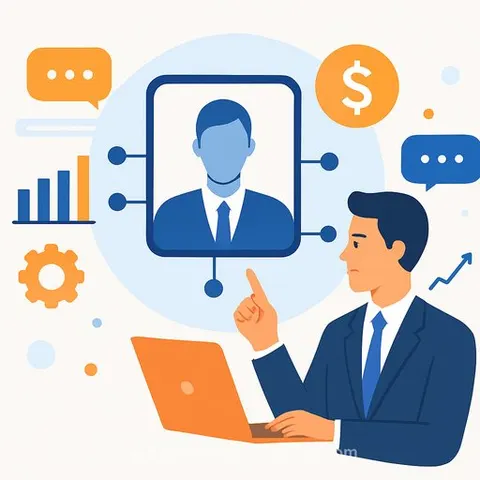
Twin1 AI has emerged from stealth with a $20 million seed round to scale an enterprise platform that creates AI-powered digital twins for professional knowledge workers. Bessemer Venture Partners, Tribeca Venture Partners and Aramco Ventures co-led the financing, which will fund team expansion in San Mateo and London, increased go-to-market investment, and further development of the core technology.
The company, founded in 2025 by Lewis Z. Liu, Tom Cahn, Huiting Liu and Jonathan Budd, is building what it calls an enterprise coordination and trust layer. Each professional can have an AI-powered digital twin that represents their knowledge, context, relationships and judgment. The platform connects to email, meetings, documents and workplace systems, and operates across Slack, Microsoft Teams, Outlook, Gmail, Google Drive and SharePoint.
How the platform works
Twin1 combines individual digital twins with six layers of privacy and governance controls. Its Twin Network lets digital twins locate relevant people and knowledge and coordinate work while respecting permissions and human approval. The platform also includes an enterprise MCP server that gives AI agents and enterprise software governed access to organizational context.
The technology has been deployed with partners across legal, financial services and energy for more than a year. Customers report the platform can automate up to 50% of communications work performed by knowledge workers. Deployments include Linklaters, Orrick, Dechert, Customers Bank and Aegis Energy.
For PR and communications teams, the core question is how much of their daily workflow - drafting, coordinating, chasing approvals, aligning messaging across channels - can be delegated to a system that carries their context and judgment. Twin1's claims suggest the answer is a significant share, which is why professionals in this field should watch how these tools handle tone, nuance and accountability. Training on AI for PR & Communications can help teams assess where automation fits without losing the human oversight clients expect.
What the founders and investors say
"In every knowledge organization, the human is the atomic unit of knowledge. The opportunity with AI is not to flatten people's expertise into generic output, but to connect and amplify their unique knowledge, judgment and context. Our belief is that AI should work for people, not done to them," said Dr. Lewis Liu, co-founder and CEO of Twin1 AI.
"Twin1 provides the opportunity to mine our collective data, and it is one of the most exciting developments in the practice today, because of the way it will enhance our client advice and make practicing more interesting," said Wendy Butler Curtis, chief innovation officer at Orrick, Herrington & Sutcliffe.
"Enterprise knowledge has become increasingly fragmented, creating real friction in how organizations access and use expertise. Twin1 AI is indeed building an individual-first context layer that allows users to extend their knowledge across teams and systems," said Elliott Robinson, partner at Bessemer Venture Partners.
The round also included EJF Ventures, Tin Alley Ventures, AGI House Ventures, Neo, F-Prime, Btech Consortium, and several individual investors.
Why this matters for PR and communications professionals
If digital twins can automate up to half of knowledge worker communications, PR teams should expect pressure to adopt similar tools - or at least to understand how clients and competitors use them. The practical takeaway: start mapping which parts of your workflow depend on personal judgment and relationships, and which parts are repeatable coordination that a twin could handle. That distinction will determine where automation helps and where it creates risk, particularly around client confidentiality and brand voice. Teams that build skills in AI Agents & Automation now will be better positioned to set the terms of how these systems get deployed in their organizations.