
AI news ·
UAE retailers deploy AI agents to automate pricing and inventory management
UAE retailers use agentic AI to automate pricing and inventory. Success requires integrating data systems and strict IT governance to prevent shadow AI risks.
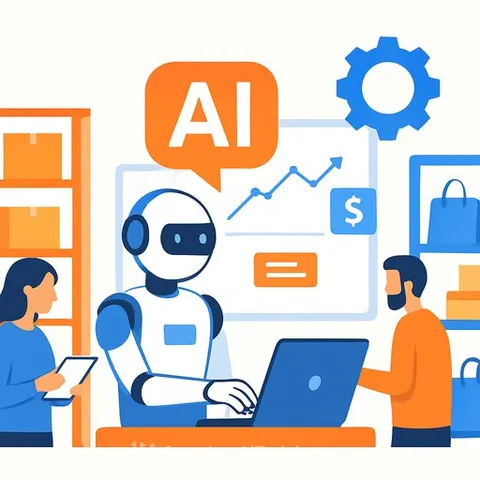
Retailers across the UAE are using agentic AI systems to set prices, manage stock, and coordinate merchandising, pushing artificial intelligence from a back-office analyst into an operational role that acts with limited human intervention.
The shift marks a new phase of digital transformation for the sector, as e-commerce growth and operational complexity drive businesses to adopt systems that can both recommend and carry out tasks across departments.
According to Computers Weekly, Sulaiman Yusuf, Middle East and Africa regional vice president at UiPath, said the technology moves AI beyond generating insights. "The technology enables AI to move beyond generating insights by analyzing information from multiple business systems and executing decisions within established governance frameworks," Yusuf said.
Yusuf added that many operational processes still rely on staff manually pulling information from separate platforms before acting-a bottleneck that agentic AI can address if systems are connected.
The integration barrier
Industry specialists say the effectiveness of AI agents depends largely on integrating enterprise data rather than collecting additional information. Many retailers continue to operate disconnected merchandising, enterprise resource planning, warehouse management and e-commerce systems, limiting their ability to respond to market shifts.
Automated pricing and supply chain decisions
Retailers are also exploring AI-driven pricing strategies that continuously evaluate demand, competitor activity, inventory levels and profitability before recommending or implementing price adjustments. Similar technology is being used to optimize promotional campaigns, inventory replenishment and product distribution across multiple store locations. Retail managers looking to build skills in these areas can follow an AI Learning Path for Retail Managers that covers inventory optimization and sales forecasting.
The technology is also expanding into manufacturing, where AI agents are being used to improve procurement decisions, manage supply chains and generate commercial pricing recommendations based on real-time production costs and market conditions.
Governance and the risk of shadow AI
Despite growing adoption, governance remains a critical challenge. Yusuf warned, "Shadow AI-unauthorized AI systems operating outside IT oversight-could expose organizations to operational, security and compliance risks if companies fail to control system access and monitor AI decision-making."
He emphasized that organizations should establish clear governance policies, including restricted system access, approval mechanisms and thorough audit trails, to ensure AI systems operate transparently and comply with regulatory requirements.
According to Yusuf, businesses that combine trusted data, integrated digital infrastructure and strong governance frameworks will be best positioned to scale AI safely and gain a competitive advantage.
Why this matters for operations teams
For operations teams, the rise of agentic AI means the end of manual data gathering across disconnected platforms. Instead, pricing, stock levels, and promotions can react to real-time market signals. But that payoff requires integrated systems and strict AI governance. Operations leaders should prioritize unifying their tech stack and working with IT to define clear rules for what AI systems can decide and do on their own. Without that, they risk adding faster errors instead of smoother workflows.