
AI news ·
Uganda faces a choice between colonial schooling and an AI-driven decolonised education system
Uganda's education system faces a defining choice as AI enters classrooms: reinforce a colonial model of rote learning or build local relevance. Most AI tools, trained on Euro-American data, risk marginalizing Ugandan knowledge unless educators lead the adoption.
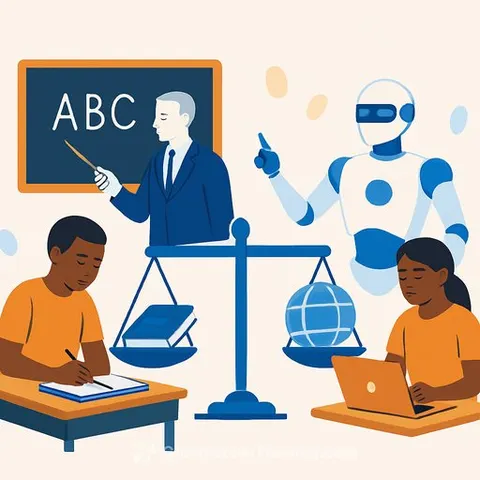
AI in Ugandan classrooms: A choice between colonial legacy and local relevance
Uganda's education system faces a defining moment as artificial intelligence reaches its classrooms. The country must decide whether AI will reinforce a colonial model built on rote learning and Western knowledge systems, or help build an education that serves local realities. That decision, educators and policymakers say, requires asking what school is actually for.
The current system was never designed for independent thinking. "This model was designed to produce clerks and administrators for a colonial state, not critical thinkers or innovators for a liberated nation," the article's analysis states. Students advance through examinations that reward memorisation, and curricula prioritise Western histories and sciences over African ones.
AI could make that problem worse. Most AI tools are trained on data reflecting a primarily Euro-American worldview. When a Ugandan student asks a chatbot for information, they receive answers framed within that perspective, which marginalises local knowledge, languages, and histories.
What AI can offer Ugandan education
The same technology also offers an escape from the rigid, one-size-fits-all curriculum. Adaptive learning platforms let students work at their own pace. AI can translate educational content into local languages and generate problems rooted in Ugandan life, from agriculture in the countryside to entrepreneurship in Kampala, instead of importing foreign case studies.
But technology alone will not decolonise education. That requires deliberate curriculum redesign that places African and Ugandan histories, philosophies, and sciences at the centre while still engaging with the wider world. It also means training teachers to become facilitators of inquiry and dialogue rather than just users of new tools.
Communities, parents, and elders must be involved in defining what an educated person should look like in this century. The goal of schooling cannot remain the narrow pursuit of certificates and university admission, the article argues. It must equip young Ugandans to solve local problems, think critically about their own society, and participate in the global economy without losing their cultural grounding.
For educators and institutions exploring these shifts, resources like AI for Education and AI for Teachers offer practical starting points for integrating AI into teaching practice.
Who controls the algorithms
Ugandan educators and policymakers must lead the conversation about AI adoption, the article insists. They need to answer hard questions: Who controls the data and algorithms used in classrooms? How do we ensure AI tools serve educational goals rather than dictating them? And how do we protect students' innovative capacity from being reduced to passive consumption of foreign technology?
"The future of African education is not about choosing between tradition and technology," the article states. "It is about using the tools we have to build a system that is truly relevant, inclusive, and liberating."
Why this matters for education professionals
For teachers, administrators, and curriculum developers, the practical takeaway is that AI adoption is not a procurement decision. It is a pedagogical one. Schools that introduce AI without first rethinking what they want students to learn will simply digitise the old colonial model. Those that start with local needs and work backward to the technology have a chance to build something genuinely different. The time to start that conversation is now, before the tools arrive and make the decision for you.