
AI news ·
UH Manoa receives $2 million to develop AI that detects environmental threats to livestock, crops, and aquaculture
The University of Hawaii at Manoa landed $2 million in federal funding to build AI systems that detect diseases, pests, and climate threats to farms, ranches, and aquaculture before they spread.
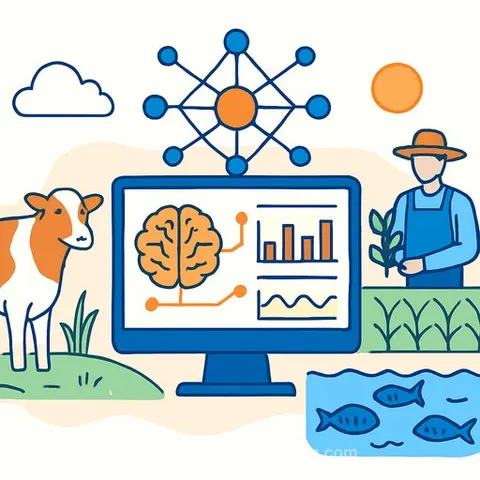
The University of Hawaii at Manoa has secured $2 million in federal funding to build artificial intelligence systems that monitor environmental threats to the state's farms, ranches, and aquaculture operations. The project aims to give producers early warnings about diseases, pests, and climate-related risks before they cause widespread economic damage.
Researchers will develop AI-driven sensors and data analysis tools that scan for biological and environmental stress signals across livestock, crop, and fish production systems. The work addresses a persistent challenge in island agriculture: detecting problems early enough to contain them when resources and expert personnel are often spread thin across remote locations.
Where the money comes from
The funds were allocated through a federal appropriations package, channeled to UH Manoa's College of Tropical Agriculture and Human Resources. The project falls under broader federal efforts to modernize agricultural monitoring through automated detection rather than manual inspection alone.
What the technology targets
The AI platform will process data from field sensors, water quality monitors, and imaging systems to flag anomalies that signal emerging threats. For livestock, that could mean detecting respiratory illness patterns before visible symptoms spread through a herd. For aquaculture, the system might catch shifts in water chemistry that precede disease outbreaks in fish stocks. Crop monitoring will focus on pest pressure and plant stress indicators visible to spectral imaging before the human eye catches them.
The research team has not yet released specific timelines for field testing or deployment, but the grant structure suggests a multi-year development cycle with on-farm validation built into later phases.
Why this matters for IT and research professionals
For developers and data scientists working in agriculture, environmental monitoring, or edge AI, this project signals where federal research dollars are flowing: toward practical, sensor-driven machine learning that operates in bandwidth-constrained rural environments. The technical demands - training models on sparse anomaly data, building false-positive-tolerant alert systems, and integrating heterogeneous sensor streams - mirror challenges in industrial IoT and remote infrastructure monitoring. Professionals with skills in computer vision, time-series analysis, or edge deployment architectures will recognize the problem set as directly transferable to other sectors facing similar environmental sensing requirements.